1. Introduction
As an agronomic country, Rice (
Oryza sativa L.) is the principle food crop in Bangladesh which is cultivated about 75 percent of agricultural land (and 28 percent of GDP). Recently Bangladesh is the sixth largest producer of rice but the productivity is lower than other south Asian countries like Malaysia and Indonesia. In orient and sub-tropical regions rice is the main staple cereal provides about 21%, 14% and 2% of global energy, protein and fat supply, respectively
| [1] | T. B. Salam, B. Karmakar, S. M. T. Hossain, M. H. Robin, Z. Mariam, M. Hossain, Agronomic Performance of Modern Rice Varieties in South-west Bangladesh, Plant Science Today 6(4) (2019) 528-532, https://doi.org/10.14719/pst.2019.6.4.632 |
[1]
.
The whole rice grain comprises of about (63.6–73.2%) carbohydrate, (5.8–7.7%) protein, (1.5–2.3%) fat (7.2–10.4%) fiber, and (2.9–5.2%) ash content. The major three parts of rice grain i.e., endosperm or white rice (~70%), hull/husk (~20%), and bran (~10%)
| [2] | C. A. garcia, G. Gavino, M. B. Mosqueda, P. Hevia, V. C. Gavino, Correlation of tocopherol, tocotrienol, γ-oryzanol and total polyphenol content in rice bran with different antioxidant capacity assays,” Food Chem. 102(4) (2007) 1228-1232, https://doi.org/10.1016/j.foodchem.2006.07.012 |
[2]
. Rice bran is the brownish part of rice contains 12-20 % of total kernel weight which is taken out during de-husking and milling of paddy in fine grain from. It is the major by-product of rice milling industry obtained as less expensive and indispensable soft and fluffy off-white powdery material. A large quantity of bran is used as a cattle feed and fertilizer. Rice Bran contains a good amount of protein (12-16%), lipid (16-22%), starch, essential fatty acids, dietary fibers (8-12%), vitamins and minerals, particularly vitamin E
| [3] | A. Rosniyana, M. A. Hashifah, S. Norin, The physico-chemical properties and nutritional composition of rice bran produced at different milling degrees of rice, J. Trop. Agri. and Food Sci. 35(1) (2007) 99-105. |
[3]
. It is also the source of high quality vegetable oil viz. Rice Bran Oil (RBO), is widely consumed in Asian countries like India, China, Indonesia, Japan and Korea also recommended by World Health Organization (WHO). RBO is good source of unsaturated fatty acids (linoleic acid (33%) and oleic acid (45%)) and various phytochemicals such as polyphenols, phytosterols, tocopherols, squalene and γ-oryzanol. Due to presence of these bioactive compounds the oil exhibiting antioxidant, antiallergenic and anti-inflammatory activities that is useful for physiological activities like treatment of atherosclerosis, cardiovascular disease and hyperlipidemia
| [4] | M. Patel, S. N. Naik, Gamma-Oryzanol from rice bran oil-A review, J. Sci. Ind. Res. 63(2004) 569-578. |
[4]
. Numerous reports show that, oryzanol which present in RBO can reduce harmful cholesterol (LDL) without reducing good one (HDL)
| [5] | T. A. Wilson, H. M. Idreis, C. M. Taylor, R. J. Nicolosi, Whole fat rice bran reduces the development of early aortic atherosclerosis in hypercholesterolemic hamsters compared with wheat bran, Nutri Res. 22(11) (2002) 1319-1332, https://doi.org/10.1016/S0271-5317(02)00438-4 |
[5]
. RBO Contains tocotrienol the most powerful and precious vitamin E source reports having anti-cancer effects too. Compared to other cooking oils RBO is very much stable at high temperature (smoking point is 254ºC) and has good shelf-life because of antioxidants present in it
.
Natural antioxidant compounds are getting more important due to its dual role as lipid stabilizers in food industry and preventive suppressor of oxidative diseases such as cancer and ageing. However before human consumption this crude vegetable oil undergo refining process which results in reducing natural antioxidants, thus lowering the nutritional value and antioxidant activity of the final oil product. The conventional refining process consist of several stages such as degumming, neutralization, bleaching, dewaxing and deodorizing. According to the studies, in the neutralization step the amount of γ-oryzanol and squalene is reduced significantly in RBO. In addition, the amount of tocopherol/tocotrienol content is reduced about 25% in deodorized oil compared to crude oil, and in the bleaching and deodorization steps of refining process concentration of phytosterols also decreased significantly
| [7] | V. V. Hoed, G. Depaemelaere, J. V. Ayala, P. Santiwattana, R. Verhe, W. De Greyt, Influence of Chemical Refining on the Major and Minor Components of Rice Bran Oil, J. American Oil Chem. Soci. 83(2006) 315-321, https://doi.org/10.1007/s11746-006-1206-y |
[7]
.
Considering this issue the main focus of our study is to determine physio chemical, phytochemical, antioxidant properties and micronutrients of Rice Bran Oil and effect of refining process on these parameters. To conduct this study, we extract RBO from three Bangladeshi rice varieties (BRRI-28, BRRI-29 and Rajvogh) which were compared with refined bran oil. On the other hand, in Bangladesh a huge amount of rice is produced every year but a little amount of rice bran is used for oil production as these are used only for fish and cattle feed. Despite its good phytochemical and antioxidant properties, RBO is less popular in our country than soybean and palm oil. Another focus of the study is to introduce people with the benefits of RBO produced from the cheaper and popular Bangladeshi rice varieties. If it is possible then dependence on international markets and prices will be substantially reduced in edible oil sector.
2. Materials and Methods
2.1. Chemicals and Reagents
Gallic acid (3,4,5-trihydroxybenzoic acid), catechin, 1,1-diphrnyl -2- picrylhydrazyl (DPPH), Ascorbic acid reagents were purchased from Sigma-Aldrich (St. Louis, MO). Aluminium chloride (AlCl3), sodium nitrite (NaNO2), Sodium hydroxide (NaOH), Sodium Carbonate (Na2CO3) were purchased from Merck Co. (Darmstadt, Germany). Folin-Ciocalteu’s phenol reagent and all other necessary reagents were purchased from LOBA chemie (Mumbai, India). The standards chromium, copper, iron and zinc were purchased from Kanto chemical (Tokyo, Japan).
2.2. Sample Collection
Rice bran from BRRI-28 and Rajvogh was collected from Kalampur (Savar) in Bangladesh.Another variety of rice bran from BRRI-29 was collected from Noakhali district. Refined (brand name- Pure Gold) rice bran oil was purchased from local market in Tongi (Gazipur).
2.3. Extract Preparation
The three varieties of ground rice bran samples (50 g) were weighed and placed into extraction thimble. Then thimble was transferred into a soxhlet extractor and added 400mL of n-hexane to the extraction flask. The color of hexane was changed from colorless to golden yellow, which indicates that the lipids in the rice bran were being extracted. The extraction process was terminated after 10 cycles. After that, n-Hexane was removed at 50°C using a rotary evaporator. The sample was collected and another sample was prepared using the same procedure.
2.4. Physiochemical Properties of Rice Bran Oil
2.4.1. Acid Value
The acid value was estimated using AOAC method (1990)
| [8] | [AOAC]. Association of Official Analytical Chemistry International. (1990). Official methods of analysis of AOAC international. 15th ed. Methods 932.06, 925.09, 985.29, 923.03. |
[8]
. Oil sample (6.00 g) was weighed into a conical flask and 50 ml of hot previously neutralized alcohol was added. The mixture was later boiled on a water bath and titrated with 0.1N potassium hydroxide (KOH) solution until the pink color (stable for few minutes) returned.
The acid value (A. V.) was calculated from the following expressions:
Where N = normality of KOH = 0.1M (in this case), 282 = molar mass of oleic acid and 56.1 = molar mass of KOH
2.4.2. Peroxide Value
This was estimated by the AOAC method (1990)
| [8] | [AOAC]. Association of Official Analytical Chemistry International. (1990). Official methods of analysis of AOAC international. 15th ed. Methods 932.06, 925.09, 985.29, 923.03. |
[8]
. Oil sample (5.0 g) was accurately weighed into a conical flask, and dissolved in solvent mixture containing 12 ml chloroform and 18 ml glacial acetic acid. Aqueous potassium iodide (0.5 ml) solution was added. The flask was stoppered and allowed to stand for 1 min. 30 ml of water was added and the solution was titrated with 0.1 M sodium thiosulphate solution until the yellow colour had almost gone. About 0.5 ml of starch solution was introduced and titration continued with the reagent added slowly until the blue black colour disappeared. During the titration, the flask was continuously and vigorously shaken to transfer the liberated Iodine from the chloroform layer to the aqueous layer. A blank titration was also performed, and the peroxide value was obtained from the formula:
Where F = Factor of 0.1N Na2S2O3, A = Sample titre value and B = Blank titre value.
2.4.3. Iodine Value
Iodine value was estimated according to the AOAC method (1990)
| [8] | [AOAC]. Association of Official Analytical Chemistry International. (1990). Official methods of analysis of AOAC international. 15th ed. Methods 932.06, 925.09, 985.29, 923.03. |
[8]
. Oil sample (0.25 g) was weighed into a conical flask and then dissolved with 10 ml CHCl
3 and 25 ml Hanus reagent. The flask and its content were placed in the dark for about 30 min. 10 ml of 15% KI solution was later added with thorough shaking and the solution on the side of the flask and the stopper was washed down with 100 ml of distilled water. 25 ml of this solution was then titrated with standard 0.1N sodium thiosulphate solution, added gradually with constant shaking until the yellow solution turned almost colourless. Two drops of freshly prepared starch indicator was added and titration continued in drops until the blue black colour entirely disappeared. Blank determinations were conducted. The Iodine value was calculated using
Where, B = Blank titre value (ml), S = Sample titre value (ml) and Normality of Na2S2O3 = 0.1 N.
2.4.4. Saponification Number
The Saponification number was estimated using AOAC method (1990)
| [8] | [AOAC]. Association of Official Analytical Chemistry International. (1990). Official methods of analysis of AOAC international. 15th ed. Methods 932.06, 925.09, 985.29, 923.03. |
[8]
. 2 g of oil was weighed into a conical flask and 25 ml of 0.46 N alcoholic KOH were added. A blank was also prepared by taking 25 mL of alcoholic KOH in a similar flask. Reflux condensers were fitted to both flasks and the contents were heated in a water bath for one hour, swirling the flask from time to time. The flasks were then allowed to cool a little and the condensers washed down with a little distilled water. The excess KOH was titrated with 0.46 N HCl acid using phenolphthalein as indicator. The saponification value was calculated using the following equation:
Where, b = titre value of blank (mL), a = titre value of sample (mL), F = factor of 0.46 N HCl = 1 (in this case) and 28.05 = mg of KOH equivalent to 1 ml of 0.46 N HCl and W is weight of sample.
2.5. Phytochemical Properties of Rice Bran Oil
2.5.1. Total Phenolic Content (TPC)
Total phenolics content was determined by the Folin– Ciocalteu method
. 0.50 g of oil sample was weighed and subjected to dilution by hexane to obtain desired concentration (1000µg/mL). 1 mL aliquot of oil sample (1000µg/mL) and standard at various concentrations (62.50, 125, 250, 500, 1000 µg/mL) were diluted to 5.0 mL with distilled water. Folin– Ciocalteu reagent (5.0 mL) was added. After 3.0 min, 5.0 mL of 10% sodium carbonate was added. The mixtures were allowed to stand for 1 hour with intermediate shaking. After 1 h, absorbance at 725 nm against a reagent blank was measured using a PD- 303S spectrophotometer (APEL Co. Ltd. Kawaguchi, Japan). The results were expressed as mg gallic acid equivalents (GAE) per gram of oil using gallic acid standard curve. The analysis was carried out in triplicates.
2.5.2. Total Flavonoid Content (TFC)
Total flavonoid content of the oil sample was determined by aluminum chloride spectrophotometric method
| [10] | U. Salma, H. Shahjalal, T. Ahmmed, M. U. Ansary, I. Khalil, N. Karim, Effect of Boiling on the Nutritional Value, Phytochemical Contents, and Antioxidant Activity of Commonly Consumed Potato ( Solanum tuberosum L.) Varieties in Bangladesh, J. Food Nutr Res. 8(8) (2020) 382–391, https://doi.org/10.12691/jfnr-8-8-1 |
[10]
. 0.50 g of oil sample was weighed and diluted by hexane to obtain desired concentration (1000µg/mL). 1 mL aliquot of oil sample (1000µg/mL) and standard at various concentrations (62.50, 125, 250, 500, 1000 µg/mL) were diluted with distilled water (4 mL) in a 10 ml volumetric flask. Then, 5% NaN0
2 solution (0.3 ml) was added to the samples. After 5 min, 10% AlCl
3 (0.3 mL) was added and at 6 min, 1M NaOH (2 mL) was added. Water (2.4 mL) was then added and mixed thoroughly. Absorbance of the reaction mixture was read at 510 nm against a reagent blank. Total Flavonoid Content was estimated from catechin calibration curve (R
2=0.977) and results expressed as mg of catechin Equivalent per gram oil sample (mg CE/g). The analysis was carried out in triplicates.
2.6. Antioxidant Activities of Rice Bran Oil
2.6.1. DPPH Radical Scavenging Activity
DPPH radical scavenging activity was measured by using the DPPH (1,1-diphenyl-2 picrylhydrazyl) assay as described by Mensor et al. (2001) with slight modifications
| [11] | L. L. Mensor, F. S. Menezes, G. G. Leitao, A. S. Reis, T. C. dos Santos, C. S. Coube, S. G. Leitao, Screening of Brazilian Plant Extracts for Antioxidant Activity by the Use of DPPH Free Radical Method, Phytotherapy Research 15(2001) 127-130, https://doi.org/10.1002/ptr.687 |
[11]
. The deep colored free radical DPPH was decolorize when picks up an electron from an antioxidant. Various concentrations of (1000 - 31.25 µg/ml) of oil in hexane were prepared. 3.0 ml (0.1 mM) DPPH in methanol was added to 1.0 ml solution of the oil samples and allowed to stand at room temperature in a dark chamber for 30 min. After 30 minute, the change in colour from deep violet to light yellow was measured at 517 nm on a spectrophotometer. When the reading was complete, the percentage of inhibition of samples was calculated from obtained absorbance by the equation:
%inhibition=((Abscontrol-Abssample)/Abscontrol×100
Where Abs control is the absorbance of DPPH radical in methanol, Abs sample is the absorbance of DPPH radical in oil.
Then, curves were constructed by plotting percentage of inhibition against concentration in μg/mL. The equation of this curve allowed to calculate the IC50 corresponding to the sample Concentration that reduced the initial DPPH• absorbance of 50%. A smaller IC50 value corresponds to a higher antioxidant activity. All test analyses were realized in triplicate.
2.6.2. Total Antioxidant Capacity by Phosphomolybdate Method
The total antioxidant activity of samples was evaluated by phosphomolybdate method with slight modifications
| [10] | U. Salma, H. Shahjalal, T. Ahmmed, M. U. Ansary, I. Khalil, N. Karim, Effect of Boiling on the Nutritional Value, Phytochemical Contents, and Antioxidant Activity of Commonly Consumed Potato ( Solanum tuberosum L.) Varieties in Bangladesh, J. Food Nutr Res. 8(8) (2020) 382–391, https://doi.org/10.12691/jfnr-8-8-1 |
[10]
. An aliquot of 0.3 ml of both the oil samples and standard (31.25-1000 μg/ml) was combined with 3.0 ml of reagent (0.6 M sulfuric acid, 28 mM sodium phosphate and 4 mM ammonium molybdate). The tubes were capped and incubated in a boiling water bath at 95°C for 90 min. After the samples had cooled to room temperature, the absorbance was measured at 695 nm against the blank using a UV spectrophotometer. The blank solution contained 3.0 ml of reagent solution and the appropriate volume of the same solvent used for the sample and it was incubated under same conditions as rest of the sample. The total antioxidant capacity was expressed as μg equivalents of catechin by using the standard catechin graph.
2.6.3. Nitric Oxide Radical Scavenging Activity
The nitric oxide radical scavenging activity of oil was evaluated as described by Garrat et al. (1964) with slight modifications
. 2 ml of 10 mM sodium nitroprusside prepared in phosphate buffer saline (pH 7.4) was mixed with 0.5 ml of oil samples at various concentrations ranging from 31.25 to 1000 µg/ml and 0.5 ml of ascorbic acid (standard) at various concentrations ranging from 3.12-100 µg/ml. The mixture was incubated at 25°C. After 150 min, 0.5 ml of incubation solution was withdrawn and mixed with 0.5 ml of Griess reagent. The mixture was incubated at room temperature for 30 min, followed by the measurement of absorbance at 546 nm using spectrophotometer. When the reading was complete, the percentage of inhibition of samples was calculated from obtained absorbance by the equation:
%inhibition=(Abscontrol-Abssample)/Abscontrol×100
Where Abs control is the absorbance of blank control (NO radical solution without test sample), Abs sample is the absorbance of test samples.
Then, curves were constructed by plotting percentage of inhibition against concentration in μg/mL. The equation of this curve allowed to calculate the IC50 corresponding to the sample concentration that reduced the initial NO• absorbance of 50%. A smaller IC50 value corresponds to a higher antioxidant activity. All test analyses were realized in triplicate.
2.7. Micronutrients in Rice Bran Oil
This was done by the method described by Anwar et al. (2004) with slight modifications
. Samples were prepared for analysis by wet digestion (acid digestion) method. Triplicate samples of 1.0g were weighed into separate conical flasks. 5mL of concentrated nitric acid (HNO
3) was then added and the contents heated at 80º C for 30 minutes on a hot plate. 5mL of concentrated sulphuric acid and 30% hydrogen peroxide (each) were added occasionally and heating was continued for 2 hours at 200º C to completely decompose the organic matter, until obtaining clear solutions. All contents of the flasks were evaporated and the semidried mass was dissolved in a small amount (approx. 5mL) of deionized water, filtered through Whatman # 102 paper, and made up to a final volume of 25 mL in volumetric flasks with 2N nitric acid. The conents of the flask were transferred into a plastic bottle for assessment by atomic absorption spectrophotometer (Shimadzu AA-7000).
2.8. Statistical Analysis
All analyses were performed in triplicate and the data were reported as the mean ± standard deviation. They were subjected to two tailed t-test (P<0.05) to assess the variation of values given by each samples as statistical significant value. Data were analyzed using Microsoft Excel 2013 (Redmond, Washington, USA).
3. Results and Discussion
3.1. Physiochemical Properties of Rice Bran Oil
3.1.1. Acid Value
Acid value is the number of mg of potassium hydroxide required to neutralize the free fatty acid in 1g of fat. It measures the amount of free fatty acids present in the oil. In industrial use acid value of the oil indicates its edibility and suitability for use
. In this study, the acid values for the extracted rice bran oil from BRRI-28, BRRI-29 and Rajvogh were found to be 14.03±0.97, 13.33±0.70 and 16.82±1.00 mgKOH/g respectively (
Table 1), which are lower than the reference values for crude rice bran oil
| [15] | R. Kusum, H. Bommayya, P. P Fayaz, H. D. Ramachandran, Palm oil and rice bran oil : Current status and future prospects, Int. J. Plant Physiol. Biochem. 3(8), (2011) 125-132, https://doi.org/10.5897/IJPPB.9000032 |
[15]
. The refined oil sample had significantly lower acid value (0.47±0.00 mgKOH/g) than the crude oils (
Table 1). The lower the acid value of oil, the fewer free fatty acids it contains which make it less susceptible to rancidity and vice versa. The acid value for the crude oil showed that they contain high amount of free fatty acids. The reason could be present of some enzymes in the rice bran i.e., α-amylase, β-amylase, peroxidase, catalase, lipase, lipoxygenase etc. Hydrolysis of oil in the rice bran is accelerates by lipase convert them into glycerol and free fatty acids (FFA) making rice bran oil to be unstable
| [16] | O. Pourali, F. S. Asghari, H. Yoshida, A Rapid and Ecofriendly Treatment Technique for Rice Bran Oil Stabilization and Extraction under Sub-critical Water Condition, Proc. World Cong. Eng. Comp. Sci. 1(2009) 20-22. |
[16]
. Therefore lower acid value of commercial refined oil suggests its high smoke point, as such, it could be suitable for deep frying.
3.1.2. Peroxide Value
Peroxide value is the most widely used for measurement of oxidative rancidity and deterioration of oils and fats. It is usually expressed in milli-equivalent of oxygen per kg of oil
. During storage vegetable Oil undergoes degenerative oxidation process as lipids (Polyunsaturated Fatty Acids) are susceptible to peroxidation which makes them unappealing and inappropriate for consumption
. In this study, refined oil was identified to have peroxide value of 6.65 meqO
2/kg (
Table 1) which is in agreement with the reference range. The peroxide values of the extracted rice bran oil from BRRI-28, BRRI-29 and Rajvogh were found to be 32.94±1.53, 26.68±1.68 and 34.50±0.88 meqO
2/kg respectively (
Table 1) which are within the range of rancid oils (20 to 40 meqO
2/kg)
.The peroxide value of crude oils were significantly (P<0.05) higher than value for commercially obtained refined oil. This could be attributable mostly to the high concentration of Cu and Fe in the extracted rice oil. Copper and Iron is the strongest pro-oxidant for oils, the content of iron and copper should be below 0.1 ppm and 0.02 ppm for the best stability
. In this study, copper and iron content is several times higher these could come from vessels used in parboiling and the milling machines. Thus high peroxide value from the rice bran oil probably due to oxidative process induced by the high iron and copper content.
3.1.3. Iodine Value
Iodine values of the extracted crude rice bran oil from BRRI-28, BRRI-29 & Rajvogh were found to be 77.54±0.68, 84.70±0.83 and 71.61±1.03 respectively. For Commercially obtained refined rice bran oil was found to be 97.72±0.45 g I
2/100g (
Table 1). The obtained values are within the range of literature value but commercial oil has greater iodine value than crude bran oil
| [15] | R. Kusum, H. Bommayya, P. P Fayaz, H. D. Ramachandran, Palm oil and rice bran oil : Current status and future prospects, Int. J. Plant Physiol. Biochem. 3(8), (2011) 125-132, https://doi.org/10.5897/IJPPB.9000032 |
[15]
. The higher the iodine value of oil, is greater the degree of unsaturation. This implies that crude oils have relatively low degree of unsaturation than commercial oil. Iodine value used to determine the amount of double bond present in oil which reflects the susceptibility of oil to oxidation, also used to assessing the ability of oil to become rancid
| [18] | B. S. Ogunsina, A. S. Bhatnagar, T. N. Indira, C. Radha, Proximate composition of African bush mango ( Irvingia gabonesis ) kernels and characteristics of its oil, Ife J. Sci. 14(1) (2012) 177-183. |
[18]
. Low iodine value of oil denotes that double bonds of polyunsaturated fatty acid undergoes lipid oxidation as a result proportion of saturated fatty acids increases with the reduction of nutritional value of oils. In case of crude RBO oil has been oxidized as before extraction rice bran was not stabilized and no preservative was added to the extracted oil. The following iodine value of crude RBO could be greater if they undergo refining process before measurement. Therefore higher iodine value has disadvantages, oil will more susceptible to oxidative deterioration thereby making them difficult to store
.
3.1.4. Saponification Number
The saponification value of the commercial oil sample was 188.30 mg KOH/g (
Table 1) that is within the standard value 180-195 mg KOH/g of refined rice bran oil
| [15] | R. Kusum, H. Bommayya, P. P Fayaz, H. D. Ramachandran, Palm oil and rice bran oil : Current status and future prospects, Int. J. Plant Physiol. Biochem. 3(8), (2011) 125-132, https://doi.org/10.5897/IJPPB.9000032 |
[15]
. The crude oils were in the following order Rajvogh> BRRI-28> BRRI-29 (
Table 1). Saponification number is not used for determining nutritional values, is only of interest if the oil is for industrial purposes. Determination of the saponification value is a reasonable means of characterizing the fat
| [20] | C. P Tan, Y. B Che Man, S Jinap, M. S. A Yusoff, Effects of microwave heating on the quality characteristics and thermal properties of RBD palm olein, Innovative Food Science & Emerging Technologies, 3(2) (2002) 157-163, https://doi.org/10.1016/S1466-8564(02)00026-7 |
[20]
. Saponification values have been reported to be inversely related to the average molecular weight of the fatty acids in the oil fractions
| [21] | G. O. Oyeleke, O. Afolabi, O. A. Olayiwola, R. O Adetoro, Oil Quality Characteristics and Effects of Temperature Variations on Some Functional Properties of Horse Eye (Dioclea reflexa) Seed Flour, IOSR J. Env. Sci. Toxi. Food Tech. 2(2) (2012) 38-42. |
[21]
. The smaller the saponification values, the longer the average fatty acid chain. In this study, saponification value of commercial refined oil was found to be greater than the crude RBO oils indicate that the crude rice oils have larger molecular weight fatty acids than the refined oil (188.30±0.72 mgKOH/g) and has potential for uses in the industries. This may be due to the presence of higher saturated fatty acids.
Table 1. Physiochemical properties of Rice Bran Oil*.
Parameters | Amounts present in Rice Bran Oil |
| BRRI-28 | BRRI-29 | Rajvogh | Refined |
Acid Value (mgKOH/g) | 14.03±0.97a | 13.33±0.70b | 16.82±1.00c | 0.47±0.00d |
Peroxide Value (meqO2/kg) | 32.94±1.53a | 26.68±1.68b | 34.50±0.88c | 6.65±0.40d |
Iodine Value (gI2/100g) | 77.54±0.68a | 84.70±0.83b | 71.61±1.03c | 97.72±0.45d |
Saponification Number (mgKOH/g) | 177.81±0.24a | 175.13±0.16b | 180.26±0.70c | 188.30±0.72d |
*Table Footnote. Data are represented as the mean ± standard error (n =3). Means followed by different lowercase letters in the same row significantly different at P<0.05.
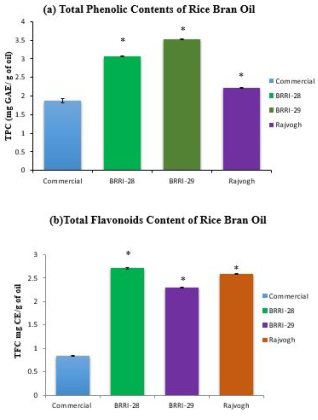
Figure 1. (a) Bar diagram of Total Phenolic contents of Rice Bran oil. (b) Bar diagram of Total Flavonoids content of Rice Bran oil. The star marks denote all the samples are significant difference (P value is ˂0.05) considering the value of commercially obtained refined oil as control.
3.2. Phytochemical Properties of Rice Bran Oil
3.2.1. Total Phenolic Content (TPC)
Phenolic contents have high redox potentiality allow them to act as reducing agents, hydrogen donors and singlet oxygen quenchers. Several studies shows that phenolic contents from natural sources found to have free radical scavenging activity
| [22] | K. S. Sim, A. M. Sri Nurestri, A. W Norhnom, Phenolic content and antioxidant activity of Pereskia grandifolia Haw. (Cactaceae) extracts, Pharmacogn. Mag. 6(23) (2010) 248-254, https://doi.org/10.4103/0973-1296.66945 |
[22]
. In this study among the four samples lowest TPC was found for commercial rice bran oil (1.88±0.09) and highest for BRRI-29 (3.53±0.03) others two samples BRRI-28 & Rajvogh contain 3.06±0.03, 2.22±0.04 respectively. According to the TPC contents, the ranking order of the four samples was as follows: BRRI-29> BRRI-28> Rajvogh> Refined [
Figure 1]. This may be due to variation of phenol content in rice variety. In oilseed products, phenolic compounds occur as the hydroxylated derivatives of cinnamic and benzoic acids, lignins, and coumarins. During oil extraction at high temperature and pressure a high amount of phenolic content is released from the seeds. Besides these there are several factors that could change the amount of phenolic contents in oil seeds such as maturity of plants, climatic conditions, soil condition, ripening process and storage time
. Total Phenolic content of RBO expressed as mg Gallic acid equivalent per gram of oil sample.
3.2.2. Total Flavonoid Content (TFC)
Crude rice bran oil from BRRI -28 had the highest value (2.71 mgCE/g of oil) while the lowest value (0.85 mgCE/ g of oil) came from refined rice bran oil, other two samples BRRI 29 and Rajvogh contain 2.30±0.02, 2.59±0.01 respectively. According to the TFC contents, the ranking order of the four samples was as follows: BRRI-28> Rajvogh> BRRI- 29> Refined [
Figure 1]. Significantly differences were observed between the refined and crude rice bran oils (P<0.05). Flavonoid has several physiological, biological and antioxidant activities like they can work against free radicals, inflammation, Free-radical mediated cellular signaling and platelet aggregation. They also provide protection from several disorders that can lead to cancer. Normally flavonoids and other phytochemicals remain in the seed coat of various oil seeds
| [24] | H. S. Gujral, P. Sharma, N. Gupta, A. A. Wani, Antioxidant properties of legumes and their morphological fractions as affected by cooking, Food Sci. Biotech. 22(1), (2013) 187-194, https://doi.org/10.1007/s10068-013-0026-8 |
[24]
. The variation of flavonoid content in different rice bran oils may be affected by genotype and environmental variation. Several studies also shows that level of phytochemicals in rice bran oil may decreased with the degree of processing and extraction procedure
| [25] | M. Sardarodiyan, E. A. Salehi, Bioactive phytochemicals in Rice Bran : processing and functional properties, Int. J. Pharma Tech Res. 9(6) (2016) 401-408. |
[25]
. Total flavonoid content of RBO expressed as mg Catechin equivalent per gram of oil sample.
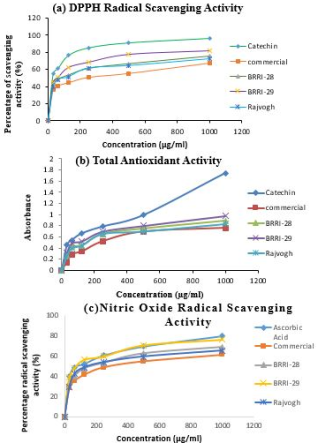
Figure 2. (a) Graphical presentation of DPPH scavenging activity of different Rice Bran Oil. (b) Graphical presentation of Total Antioxidant Activity of different Rice Bran Oil. (c) Nitric oxide radical scavenging activity of different Rice Bran Oil.
3.3. Antioxidant activities of Rice Bran Oil
3.3.1. DPPH Free Radical Scavenging Activity
Free radical scavenging activity of the plant extract or natural compound usually determined by DPPH which is a nitrogen centered free radical donor. The method is based on the measurement of the loss of deep purple color of DPPH after reaction with the test compound functioning as a proton radical scavenger or hydrogen donor
| [26] | P. Kalaisezhiyen and S. Vadivukkarasi, Evaluation of Free Radical Scavenging Activity of Various Leaf Extracts from Kedrostis foetidissima (Jacq.) Cogn., Food Sci. Human Well. 4(1) (2015) 42-46, https://doi.org/org/10.1016/j.fshw.2015.02.001 |
[26]
. The radical scavenging activity of the oil samples was observed from the decrease in absorbance of the DPPH with a gradual increase in concentration of the samples at 517 nm. This manifested in the rapid discoloration of the purple DPPH to light yellow, suggesting that the radical scavenging activity of rice bran oil was due to its proton donating ability.
The scavenging activity of all extracts towards DPPH free radicals showed good scavenging activity in a dose dependent manner expressed as percent inhibition [
Figure 2]. It was observed from the half maximal inhibitory concentration (IC
50, it is the concentration at which DPPH radicals were scavenged by 50%) that, BRRI-29 showed the greatest scavenging activity with the IC
50 value of 187.55, followed by BRRI-28 (IC
50- 284.04), Rajvogh (IC
50- 325.56) and refined oil (IC
50- 465.12). The antioxidant activity of the samples inversely proportional to IC
50 value. From the result it could be said that rice bran oils have the ability to inhibit autoxidation of lipids and beneficial for the treatment of various diseases related to lipid peroxidation for pathogenesis
| [27] | J. Chandran, D. R. S. Kumar, M. V. Reshma, P. Jayamurthy, A. Sundaresan, P. Nisha, Comparative Study On The Total Phenolic Content And Radical Scavenging Activity Of Common Edible Vegetable Oils, J. Food Biochem. 38(1) (2013) 38-49, https://doi.org/org/10.1111/jfbc.12023 |
[27]
. Scientific studies reported that higher the alpha tocopherol and oryzanol content, the higher the DPPH scavenging activity would be
| [28] | A. Malik, A. Kushnoor, V. Saini, S. Singhal, S. Kumar, Y. C. Yadav, In Vitro Antioxidant Proprties of Scopoletin, Pharmacologyonline 1(2011) 1125-1133. |
| [29] | S. Vorarat, C. Managit, L. Iamthanakul, W. Soparat, N. Kamkaen, Examination of Antioxidant Activity and Development of Rice Bran Oiland Gammma- Oryzanol Microemulsion, J. Health Res. 24(2) (2010) 67-72. |
[28, 29]
. This might explain the presence of these antioxidants in crude oils in comparatively higher amounts than the refined oil.
3.3.2. Total Antioxidant Capacity by Phosphomolybdate Method
The Total Antioxidant Capacity (TAC) of rice bran oil was estimated by phosphomolybdate method shown in
Figure 2. The principle is based on the reduction of Mo (VI) to Mo (V) by the bran oil and at acidic pH subsequent formation of green phosphate/Mo (V) complex. Both water-soluble and fat-soluble antioxidant capacity evaluates TAC of the phosphomolybdenum model. Antioxidant capacity of Catechin was used as a reference standard from which rice bran oil samples with potential antioxidant activity are compared. The results indicated a concentration dependent total antioxidant capacity
| [30] | S. Jan, M. R. Khan, U. Rashid, J. Bokhari, Assessment of Antioxidant Potential, Total Phenolics and Flavonoids of Different Solvent Fractions of Monotheca Buxifolia Fruit, Osong Pub. Health Res Pers. 4(5) (2013) 246-254, https://doi.org/10.1016/j.phrp.2013.09.003 |
[30]
. The TAC of bran oil found to be highest in BRRI 29 (0.31±0.00 µg/ml) followed by the BRRI 28 (0.26 ±0.01 µg/ml) and Rajvogh (0.25±0.02 µg/ml). It means that to reduce the oxidant in the reaction matrix different bran oil sample would have contained as much quantity of phytochemical compounds as equivalents of catechin. Lowest TAC was found for refined oil (0.15 ±0.00 µg/ml). In this study phytochemicals such as polyphenols found to be highest in BRRI 29 and lowest in commercial refined oil among bran oil samples. These highest amounts of polyphenol might be related with the highest antioxidant activity in BRRI 29 rice bran oil. In case of refined oil amount of polyphenol may be reduced through refining process which reduce the TAC.
3.3.3. Nitric Oxide Radical Scavenging Activity
In a varieties of biological processes Nitric oxide (NO•) radical plays multiple roles as an antimicrobial agent, vasodilator, effect or molecule, neuronal messenger etc. According to Yermilov et al. (1995) it forms peroxynitrite radicals (•ONOO-) by reacts with oxygen radical that causes toxicity to biomolecules such as proteins, lipids and nucleic acids
| [31] | V. Yermilov, J. Rubio, H. Ohshima, Formation of 8-nitroguanine in DNA treated with peroxynitrite in vitro and its rapid removal from DNA by depurination, FEBS Lett. 376(3) (1995) 207-210, https://doi.org/10.1016/0014-5793(95)01281-6 |
[31]
. Nitric oxide scavenging activity was expressed in terms of % inhibition of generated free radicals with respect to various concentrations of rice bran oil samples. Concentration dependent effects were observed in each case i.e, higher concentrations were found to exhibit higher % inhibition in each sample. The graphs were constructed by taking % inhibition along the Y-axis and various concentrations were taken along the X-axis. The IC
50 value (50% inhibition) of the samples and the standard ascorbic acid were determined. The antioxidant potential was found to be highest in case of extracted crude oil from BRRI-29. All the samples acted upon nitric oxide free radical according to the following order- BRRI-29 (IC
50- 286.40)> BRRI-28 (IC
50 -416.81) > Rajvogh (IC
50 -453.95)> Refined (IC
50- 557.86) [
Figure 2]. It is evident that rice bran oils significantly inhibits generation of NO• through competing with oxygen in a dose-dependent manner. These observations further highlight the importance of rice bran oil in preventing physiological deleterious caused by NO• radicals.
3.4. Micronutrients in Rice Bran Oil
Micronutrients are compounds that required in small amounts for development, growth and maintenance of body. Extracted crude rice bran oils were investigated along with commercially obtained refined rice bran oil for the presence of micro nutrients by Atomic Absorption Spectroscopy (AAS). Some trace elements such as iron, zinc, copper and chromium are essential in very small concentrations for the survival of all life forms. These elements can also be quite toxic in higher concentrations. Concentration of iron in extracted crude rice bran oils from BRRI-28, BRRI-29 and Rajvogh were found to be 43.26±0.26, 27.09±0.54 and 64.47±2.31 ppm. Refined rice bran oil was found to contain 17.97±0.24 ppm iron (
Table 2). All the values obtained from the study are largely inconsistent with the data reported by CODEX and Smouse et al. (1994) who reported the level of Iron should be below 0.1 ppm for the best stability of oil
| [32] | Smouse, T. H., Factors Affecting Oil Quality and Stability in Methods to Assess Oil Quality and Stability of Oils and Fat-Containing Foods, AOCS Publishing, (1995) 17-36. |
[32]
. The higher concentration of iron in refined rice bran oil may be due in part to poor operating and maintenance conditions in our industries. The presence of iron in crude oils may be due to the occurrence of iron in the soil where the oil crops were planted.
Table 2. Micronutrients in Rice Bran Oil*.
Parameters | Amounts present in Rice Bran Oil |
| BRRI-28 | BRRI-29 | Rajvogh | Refined |
Iron (Fe) | 43.26±0.26a | 27.09±0.54b | 64.47±2.31c | 17.97±0.24d |
Zinc (Zn) | 0.36±0.00a | 0.33±0.00b | 0.39±0.00c | 0.25±0.00d |
Copper (Cu) | 0.25±0.00a | 0.06±0.00b | 0.05±0.00c | 0.03±0.00d |
Chromium (Cr) | 1.28±0.01a | 0.96±0.02b | 4.87±0.04c | 3.05±0.07d |
*Table Footnote. Data are represented as the mean ± standard error (n =3). Means followed by different lowercase letters in the same row significantly different at P<0.05.
Zinc (Zn) content among the investigated rice bran oils was found to be highest in Rajvogh and lowest in refined oil. Amount of Zinc content for the rice bran oils showed the descending order of Rajvogh>BRRI-28>BRRI-29>Refined oil respectively (
Table 2). The Zn levels in the investigated oil samples were comparatively higher than those of several literature values
| [33] | R. Ansari, T. G. Kazi, M. K. Jamali, M. B. Arain, M. D. Wagan, N. Jalbani, H. I. Afridi, A. Q. Shah, Variation in accumulation of heavy metals in different verities of sunflower seed oil with the aid of multivariate technique, Food Chem. 115(1) (2009) 318-323, https://doi.org/10.1016/j.foodchem.2008.11.051 |
| [34] | E. Pehlivan, G. Arslan, F. Gode, T. Altun, M. M. Ozcan, Determination of some inorganic metals in edible vegetable oils by inductively coupled plasma atomic emission spectroscopy (ICP-AES), GRASAS Y ACEITES 59(3) (2008) 239-244, https://doi.org/10.3989/GYA.2008.V59.I3.514 |
[33, 34]
. Zinc occurs naturally in soil but concentration might arise due to industrial activities such as steel processing, mining, waste combustion and use of fertilizers and pesticides in agriculture. This Zn content of the soil are easily transferred from soil to edible portion of the plant and stored. Mainly Zn content of the soil is main factor for the variation of concentration in the oil samples
| [35] | S. Islam, K. Ahmed, H. A. Mamun, Heavy Metals in Cereals and Pulses: Health Implications in Bangladesh, J. Agric. Food Chem. 62(44) (2014) 10828-10835, https://doi.org/org/10.1021/jf502486q |
[35]
. From the perspective of RDA which is 15 mg for zinc, at the levels detected in this study, it is unlikely that rice bran oils contribute significant levels of zinc to the human diet and even more unlikely that rice bran oils would represent a significant contribution to zinc toxicity.
The amount of Copper (Cu) in the investigated rice bran oil from BRRI-28, BRRI-29, Rajvogh were found to be 0.25 ± 0.00, 0.06± 0.00 and 0.05 ± 0.00 ppm. Refined rice bran oil was found to contain 0.03± 0.00 ppm copper (
Table 2). Copper is the strongest pro-oxidant for oils, and for the best stability, the content of copper should be below 0.02 ppm
. It is evident that all the crude rice bran oils contained slightly higher amounts of copper reported by several literatures. Alongside, copper concentration was found to be higher in crude rice bran oils than in refined oil. This is quite obvious because refined oils must undergo the process of refining to make it suitable for consumption. Refining process favors the removal of metals to increase the oxidative stability of oil. For their essential nature or toxicity copper is significant in nutrition. Copper may enter from soil through environmental contamination with metal based pesticides or mineralization by crops. These can be varying with environmental factors, soil type, contamination ratio etc. The adult human body contains about 1.5-2 ppm of copper. Excessive intake has been reported to be toxic.
Concentration of chromium (Cr) in extracted crude rice bran oils from BRRI-28, BRRI-29 and Rajvogh were found to be 1.28±0.01, 0.96±0.02 and 4.87±0.04 ppm. Refined rice bran oil was found to contain 3.05±0.07 ppm chromium (
Table 2). In edible vegetable oils this was inconsistent with the values (0.0005±0.0001 – 0.0010±0.0001 mg/kg) obtained by Pehlivan and co-workers. Cr is occurred in the form of mineral chromites, FeCr
2O
4, is a primary ore product. Though the trivalent Cr is involved in glucose intolerance is essential for human nutrient, the level of Cr in these samples calls for health concern. Sources of chromium contamination include releases from electroplating processes and disposal of chromium containing waste. It can be transported by surface runoff to surface waters in its soluble or precipitated form
| [3] | A. Rosniyana, M. A. Hashifah, S. Norin, The physico-chemical properties and nutritional composition of rice bran produced at different milling degrees of rice, J. Trop. Agri. and Food Sci. 35(1) (2007) 99-105. |
[3]
.





 Share This Article
 Twitter
 Linked In
 Facebook
 Copy
Copy Download