Research Article | | Peer-Reviewed

Millet Production and Utilisation in Northern Ghana

Received: 9 December 2025     Accepted: 23 December 2025     Published: 26 January 2026
Views:       Downloads:
Abstract

Millet is one of the most important staple crops grown in Northern Ghana, where it plays a crucial role in ensuring climate resilience, promoting food security, supporting livelihoods, and enhancing nutrition. Northern Ghana's semi-arid climate and reliance on rain-fed agriculture make millet a crucial crop, as it is well adapted to drought and poor soil conditions. The research aimed to provide information on millet production, processing, utilisation, associated challenges, and strategies to address the challenges in selected areas of the Northern, Northeast, Upper East, and Upper West regions of Ghana. Data was collected using structured questionnaires designed in Google Forms and analysed with the Statistical Package for Social Sciences (SPSS) (version 27). The significance of relationships was determined using the Chi-Square test at the 95% confidence level. Sorghum, pearl millet, and fonio were observed to be produced and processed in varying quantities. While sorghum and pearl millet were grown in all regions, fonio was primarily grown in the Northeast. The combination of land expansion with human capital development, education, experience, and sufficient family labour could substantially enhance agricultural yields among smallholder farmers. Production challenges affected all four regions, while processing challenges were specific to each crop. The results further revealed that millet has untapped potential to enhance household income, improve nutritional outcomes, and promote sustainable agricultural development in the regions. Hybrid varieties, good agricultural practices, sustainable and efficient processing, and the use of appropriate technology should be deployed to enhance productivity and upgrade the value chain of millets in the study area.

Published in International Journal of Nutrition and Food Sciences (Volume 15, Issue 1)
DOI 10.11648/j.ijnfs.20261501.11
Page(s) 1-13
Creative Commons

This is an Open Access article, distributed under the terms of the Creative Commons Attribution 4.0 International License (http://creativecommons.org/licenses/by/4.0/), which permits unrestricted use, distribution and reproduction in any medium or format, provided the original work is properly cited.

Copyright

Copyright © The Author(s), 2026. Published by Science Publishing Group

Keywords

Nutri-cereals, Millets, Traditional Grains, Nutrition, Value Chain Upgrading, Food Processing, Food Utilisation

1. Introduction
Cereals are among the most widely consumed foods worldwide, as their preparation and storage are neither exotic nor expensive compared to other foods. It is a general term that covers most grains, which produce small seeds from a diverse array of naturally occurring grass species or cereals. It can be produced even on less-favoured agro-climatic soils and in dry regions in temperate, sub-tropical, and tropical zones .
Millets are a group of nutrient-rich cereal crops that belong to various subfamilies within the Poaceae family that thrive in temperate, sub-tropical, and tropical agroecological zones, and on marginal lands. They are one of the oldest/traditionally cultivated cereals and remain a significant staple in the semi-arid regions of Africa, particularly in northern Ghana. Millets are a group of small-seeded annual grasses that rank sixth globally in terms of commercialisation, after rice, wheat, maize, barley, and sorghum. Millets are sometimes understood to include the widely cultivated sorghum. With its resilience to harsh weather, millet is a primary food source and a crop of great economic significance to rural households. Given the region's susceptibility to climate variability, millet's adaptive nature makes it invaluable for ensuring food security and maintaining farmers' livelihoods. The Northern, Upper East, Savannah, Northeast, and Upper West Regions of Ghana are characterised by relatively poor soils, erratic rainfall, and prolonged dry seasons, making conventional farming difficult. These five regions and parts of the Bono East (e.g., Pru) regions grow millet for consumption.
The Indian Institute of Millets Research (IIMR) is a premier agricultural research institute engaged in basic and strategic research on sorghum and other millets under the Indian Council of Agricultural Research (ICAR) classifies and works on the following, Sorghum (Sorghum bicolor), Pearl millet (Pennisetum glaucum), Finger millet (Eleusine coracana), and minor millets; Foxtail (Setaria italica), Barnyard (Echinochloa spp), Little (Panicum sumatrense), Kodo (Paspalum scrobiculatum), Proso (Panicum miliaceum), Browntop (Urochloa ramosa), Teff (Eragrostis tef), and Fonio (Digitaria exilis) as millets. Teff, grown and mainly utilized in Ethiopia, and Fonio, grown and utilized in West Africa, were classified as exotic because they are not indigenous to Asia . This classification is corroborated in the International Year of Millets (IYM), which states that Millets encompass a diverse group smart (good for the people, the environment and farmers) of cereals, including pearl millet, proso millet, foxtail millet, barnyard, kodo, browntop, finger, and Guinea millet, as well as fonio, sorghum (or great millet), and teff .
Millet is also referred to as a smart crop due to its climate resilience, minimal water requirements, reduced need for agrochemicals such as pesticides and fertilisers, and significant nutritional benefits. Millets' ability to yield reasonably even in drought explains their prevalence in the region. Nutritionally, millet is gluten-free, has a low glycemic index, and is nutrient-dense. Whole grains provide different amounts of fibre, which regulates bowel function, blood sugar, and lipids, as well as satiation, influencing consumption rate and acceptance. In recent times, there has been an increasing focus on the commercialisation of millet, with efforts to develop value-added millet products, such as millet flour, snacks, and beverages, for urban markets. These initiatives have been supported by development organisations and research institutions, such as ICRISAT, which aim to improve the incomes of smallholder farmers while enhancing food security and nutrition. Value-added millet products, including processed flour and fortified foods, as well as millet-based infant cereals and snacks, are gaining popularity due to their convenience and immense health benefits.
The objective of this study was to explore millet production practices, its utilisation in food systems, and the challenges and opportunities surrounding millet production and consumption in the Northern, Northeast, Upper East, and Upper West regions of Ghana.
2. Materials and Methods
2.1. Study Area
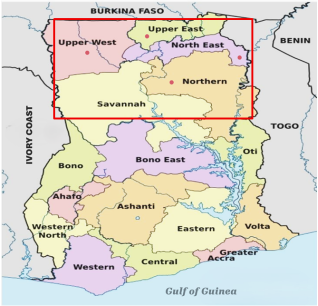
Four study regions (Northern, Northeast, Upper West, and Upper East) were selected purposively based on their production and consumption patterns. Random sampling was used to select the districts for data collection. In the Northern region, Tolon and Kumbungu communities were selected. Chereponi district was purposively selected for fonio production in the Northeast region. In the Upper West region, the Wa Municipal and Nadowli-Kaleo district were selected, while in the Upper East region, the Nabdam district (Figure 1) was selected.
Figure 1. Map of Ghana highlighting the Northern parts where the study took place.
2.2. Data Collection and Analysis
Data was collected using a questionnaire designed in Google Forms, segmented according to the target value chain actors, and administered to farmers, processors, and consumers. The questions covered themes such as respondents' demographics, the type of millet produced, production size, yields, processing methods, quantities and types of products consumed, challenges encountered in production and processing, and a training needs assessment. Data was analysed using cross-tabulations in Statistical Package for Social Sciences (SPSS) (version 27). The level of significance was determined using the Chi-Square test at a 95% confidence level.
3. Results
The results of the study are categorised into socio-demographic characteristics of respondents, land size cultivated and yields, types of millet cultivated and utilised, challenges encountered in production and processing, and production and processing needs.
3.1. Socio-demographic Characteristics of Respondents
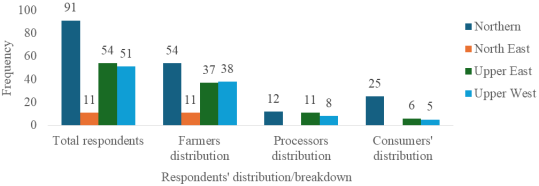
The collated socio-demographic characteristics of respondents, including age and educational background, are shown in Table 1. Figure 2 shows the regional distribution and respondent categories.
Table 1. Background of respondents.

S/N

Age range

Frequency

1.

20 - 30

37

2.

31 - 41

65

3.

42 - 52

62

4.

53 - 63

31

5.

64 - 79

12

S/N

Educational status

Frequency

1.

No education

127

2.

SHS

24

3.

JHS

24

4.

Primary

15

5.

Tertiary

14

6.

Non-formal education

3

Figure 2. Regional distribution and category of respondents.
3.2. Land Size Cultivated and Yields
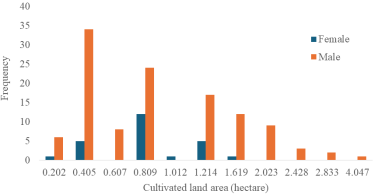
Respondents cultivated land of varying sizes in hectares (Figure 3) and are categorised by gender. The relationships between variables (Table 2), with estimated production land sizes ranging from 0.202 to 4.047 ha and yields ranging from 150 to 6,000 kg.
Figure 3. Land size used for the cultivation of millets.
Table 2. Relationship between variables.

Variable

Coefficient (Kg)

p-value

Intercept

76.985

0.226

Land_size_ha

2358.511

0.0

Family_labour

106.492

0.0

Years_experience

14.668

0.0

Education

200.222

0.0

R² = 0.957, N = 207
The total cultivated area for the study was 134.34 hectares, distributed across 207 farmers. The regression results show that land size is the most influential factor in determining yield. From the mean production details (Table 3), each additional hectare of land cultivated increased yield by approximately 2358.5 kg, holding other factors constant. Family labour also had a positive, statistically significant effect, contributing approximately 106.5 kg of additional yield per household worker. Years of farming experience improve yields by approximately 14.7 kg per year. Education contributed positively to yield, as educated farmers produce about 200.2 kg more on average than those without formal education.
Table 3. Mean production details of sampled locations.

Community

District

Type of millet

Mean land area (Ha)

Mean yield per area (Kg)

Mean quantity sold (Kg)

Banjani

Chereponi

Fonio

0.41

300

188

Sangbana

Chereponi

Fonio

0.43

447

253

Ballongpiong

Kumbungu

Sorghum

0.57

405

375

Cheyohi

Kumbungu

Sorghum

0.65

570

413

Dimanzugu

Kumbungu

Sorghum

0.61

540

450

Gbullung

Kumbungu

Sorghum

1.05

420

225

Guntassi

Kumbungu

Sorghum

0.77

450

150

Benzure

Nabdam

Pearl millet, sorghum

1.21

1050

300

Gane Asonge

Nabdam

Pearl millet, sorghum

2.23

2025

675

Nabokin

Nabdam

Pearl millet, fonio

0.98

800

225

Nangodi/Kalin

Nabdam

Pearl millet, sorghum

1.82

1500

525

Nyogbare

Nabdam

Pearl millet, sorghum

1.54

810

300

Pelungu

Nabdam

Sorghum

0.91

688

400

Sakote

Nabdam

Pearl millet, sorghum

1.32

806

150

Zanlerigu

Nabdam

Pearl millet, sorghum

1.08

650

150

Kaleo

Nadowli-Kaleo

Pearl millet, sorghum

2.02

2588

1800

Loho

Nadowli-Kaleo

Sorghum

0.81

345

Kpalsogu

Tolon

Sorghum

0.65

570

413

Kukuonayeli

Tolon

Sorghum

0.36

540

300

Nafurung

Tolon

Sorghum

0.57

480

450

Sabegu

Tolon

Sorghum

0.53

510

400

Tingoli

Tolon

Sorghum

0.36

285

150

Sombo

Wa central

Sorghum

1.75

2450

2400

Bamahu

Wa municipal

Pearl millet

1.75

3450

1875

Danko

Wa municipal

Sorghum

1.21

465

450

Kpongu

Wa municipal

Pearl millet, sorghum

1.01

575

113

Piisi

Wa municipal

Sorghum

0.94

725

713

Sing

Wa municipal

Pearl millet, sorghum

1.42

925

855

3.3. Types of Millet Cultivated and Utilised
Three main types of millets (Table 4) were cultivated and utilised by the chain actors interviewed.
Table 4. Types of millets grown and utilised.

Gender

Types of millets

Total

Pearl

Fonio

Sorghum

Pearl & Sorghum

Pearl & Fonio

Others

Male

9

12

57

36

0

11

125

Female

2

6

12

11

1

50

82

Total

11

18

69

47

1

61

207

* others represent processors, and some consumers
3.4. Products Processed from Millet
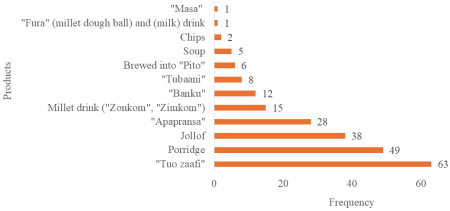
Millet is used in the preparation of various food products (Figure 4) according to consumers' preferences.
*Sorghum, particularly, is used to thicken soups (e.g., cassava leaf soup as an alternative to okra)

Download: Download full-size image

Figure 4. Food products/meals made with millet.
3.5. Consumption Frequency of Meals Derived from Millet
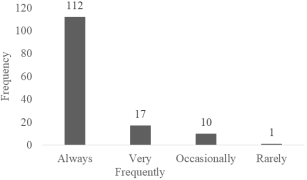
There were varied consumption frequencies (Figure 5) and various reasons for consumption (Table 5).
Figure 5. Frequency of consumption of meals made with millet.
Table 5. Reasons for consuming meals made from millet.

Reasons for the consumption of meals from millet

Frequency

1.

Delicacy and health

33

2.

Nutrition and delicacy

16

3.

Health only

16

4.

Nutrition, delicacy, affordable, and healthy

14

5.

Nutrition, affordable and healthy

12

6.

Delicacy only

10

7.

Nutrition, delicacy, affordable, cultural, and health

7

8.

Could not tell

5

9.

Nutrition and health

4

10.

Nutrition only

4

11.

Affordable and healthy

4

12.

Cultural only

3

13.

Nutrition, delicacy, and affordability

3

14.

Nutrition, affordable, cultural, and health

2

15.

Cultural and health

2

16.

Nutrition, affordable and cultural

1

17.

Nutrition, delicacy, and health

1

18.

Delicacy, cultural, and health

1

19.

Delicacy, affordable, and healthy

1

20.

Nutrition and affordable

1

Total

140

3.6. Challenges in the Production and Processing of Millet
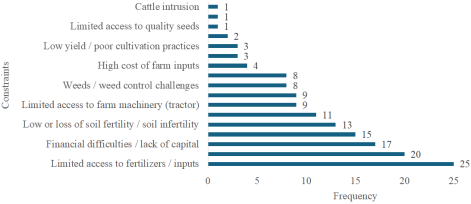
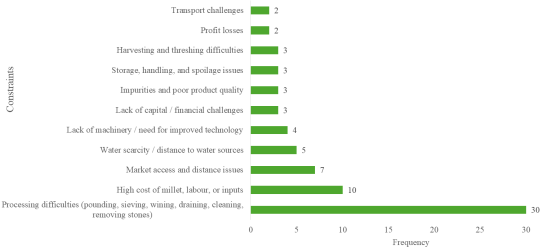
Respondents catalogued a range of challenges encountered during the production and processing of millets (Figures 6 and 7).
Figure 6. Challenges Encountered in the Production of Millet.
Figure 7. Challenges Encountered in the Processing of Millet.
3.7. Production and Processing Needs
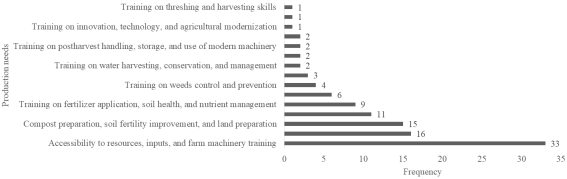
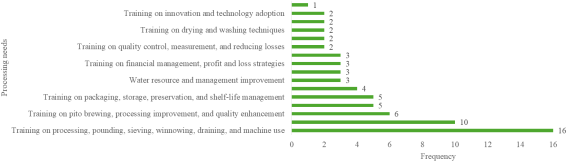
The results for respondents' production and processing needs are presented in Figures 8 and 9.
Figure 8. Production Needs.
Figure 9. Processing Needs.
4. Discussion
This discussion covers the socio-demographic characteristics of respondents, land size cultivated and yields, the type of millet cultivated and utilised, challenges involved in production and processing, and production and processing needs required to improve the chain.
4.1. Socio-demographic Characteristics of Respondents
Based on respondents' socio-demographic characteristics, 207 were interviewed across all three regions: 102 (49.3%) from the Northern region, followed by 54 (26.1%) from the Upper East and 51 (24.6%) from the Upper West.
The age distribution of respondents (Table 1) indicates a diverse representation of individuals engaged in millet-related activities across different age groups. Most respondents fall within the 31 - 41 years (65 respondents, 31.4%) and 42 - 52 years (62 respondents, 30.0%) age ranges, 20 - 30 years age group constituted 37 respondents (17.9%), 53 - 63 representing 14.97% and 64 - 79 (5.80%) representing the lowest range and the oldest age. The dominant age range suggests that middle-aged individuals primarily drive the millet farming and processing industry. This age group is likely to have accumulated farming experience while still being physically active, which may contribute to higher productivity and efficiency in millet cultivation. The declining participation of older individuals highlights the need for policies that support knowledge transfer, promote labour-saving technologies, and incentivise younger generations to engage in millet farming and value addition. Utilisation or consumption is often observed in households comprising individuals of all genders and ages.
The educational background of respondents (Table 2) showed a significant proportion (127 respondents out of 207, representing 61.4%) had no formal education, followed by 24 respondents (11.6%) with Junior High School (JHS) and Senior High School (SHS) education. In comparison, 15 respondents (7.2%) had primary education, 14 respondents (6.8%) had tertiary education, and 3 respondents (1.4%) had non-formal education. The dominance of individuals with literacy could enhance agricultural productivity, improve access to information on modern farming techniques, improve seed varieties, and improve financial management. It would also pave the way for better market engagement and participation in agricultural extension services.
Out of the 207 respondents (Figure 2), there were 140 farmers (67.6%), with the Northern region having the highest number (54 farmers), suggesting that millet cultivation is more widespread in the Northern region, possibly due to its larger land area and favourable agroecological conditions, with 31 (15.0%) processors and 36 (17.4%) consumers. The relatively low number of processors (31), often small-scale, highlights the limited value addition within the millet value chain, which could affect market opportunities and profitability. Variation in consumer distribution may be due to cultural preferences, availability, and affordability.
4.2. Land Size Cultivated and Yields
According to Figure 3, most farmers' cultivated land sizes ranged from 0.202 to 4.047 ha for millet and sorghum, totalling 149.92 ha for millet and 226.45 ha for sorghum, respectively, which were the estimated annual cultivated areas for 2019 . Most farmers used mixed cropping, which supports the assertion that in Northern Ghana millet is typically grown in mixed cropping systems, often intercropped with sorghum, maize, and groundnuts, also known as the maize-groundnut-sorghum mixture . This diversified cropping system helps mitigate the risks associated with unpredictable weather patterns, as millet's drought tolerance makes it a reliable fallback crop during dry spells and droughts .
From a total of 140 respondents on the land used for millet farming, 80.7% of the cultivated land was by men and 17.9% by women. While men cultivate larger land sizes (up to 4.047 ha), no female farmers cultivate land beyond 1.619 ha, indicating constraints, such as limited land access for women in millet production.
The relationship between variables (Table 2) reinforces that larger landholdings directly translate into higher total production. This finding is consistent with evidence from smallholder farming systems where land area is a major determinant of the overall output . However, it also reflects total, not per-hectare productivity. The positive influence of family labour aligns with studies showing that smallholder farmers in Ghana rely heavily on household labour as a key input because of low levels of mechanisation . The impact of farming experience underscores how accumulated knowledge enhances technical efficiency and adaptation to changing weather and market conditions . The significant positive coefficient for education supports the finding that literate farmers tend to adopt improved agricultural practices, utilise extension information effectively, and manage resources better . Therefore, investment in farmer education and training programmes can improve both productivity and resilience.
Overall, this suggests that combining land expansion with human capital development, education, experience, and sufficient family labour can substantially enhance agricultural yields among smallholder farmers.
Table 3 presents the mean production details of the sampled locations comprising the landholdings, type of millet grown, yield per landholding, and usage. The dominance of men in larger landholdings suggests that factors such as land tenure systems, cultural norms on land ownership versus user rights (which women mostly have), the nature of crops cultivated, and economic resources may influence land ownership. This significant disparity highlights the gender gap in access to agricultural land, a common issue in rural farming communities, and the types of crops grown. Generally, in Northern Ghana, women cultivate more vegetables and legumes than men do. Male farmers often cultivate a diverse range of crops, including cereals, root and tuber crops, legumes, fruits, and vegetables. The cultivated land area for fonio ranged from 0.405 to 0.607 ha. At the same time, mixed cropping was used by most farmers in the cultivation of millet (largely pearl millet) and sorghum.
The yields from the cultivated land area ranged from 150 - 6000 kg for pearl millet and sorghum, and 225 – 650 kg of fonio. According to the 2019 Ghana Agricultural Production Survey, the estimated annual production of millet and sorghum was 230.42 and 347.23 metric tonnes, respectively . According to the survey, the estimated production for 2019 was 2.0 MT/ha and 2.10 MT/ha for millet and sorghum, respectively, in the Chereponi district of the Northeast region .
4.3. Types of Millet Cultivated and Utilised
The types of millet grown and utilised (Table 4) indicated a diversity in millet cultivation among respondents, with sorghum (69 respondents, 33.3%), pearl millet (11 respondents, 5.3%), 47 (22.7%) respondents who cultivated a combination of pearl millet and sorghum, and 18 (8.7%) in the cultivation of fonio. Notably, a large proportion of female respondents (50 out of 82, representing 61.0%) fell under the “Others” category, which involved the processing/value addition of the crop. Sorghum's dominance, particularly among male farmers (57 out of 69), suggests a preference for its adaptability to local climatic conditions, higher yields, and its multiple uses in food and brewing. Fonio, although less developed, is a highly nutritious and drought-resistant grain; however, its low adoption rate may be due to labour-intensive processing and limited market demand compared to sorghums and millets, as affirmed by other studies . The cropping system was mixed, enhancing food security and crop resilience.
Millet is a highly versatile cereal used to prepare a variety of traditional foods and beverages in Northern Ghana (Figure 4). The percentages highlights the diversity of millet-based meals, with “Tuo Zaafi” (TZ) being the most prepared dish (63, representing 27.6%), followed by porridge (49, 21.5%), Jollof (38, 16.7%) “Apapransa” (28, 12.3%), millet drink “Zonkom” or “Zimkom” (15, 6.6%). Other notable preparations included “banku” (12, 5.3%), “Tubaani” (8, 3.5%), “Pito” (6, 2.6%), “Fura” (1, 0.4%), and “Masa” (1, 0.4%). This meal diversity was shown during the International Year of Millets as affirmed in .
“Tuo Zaafi” (TZ), a thick, starchy dish made from cereal flour and served with soups/stews, is often a staple and delicacy in many Northern households. Porridge is frequently prepared as a breakfast meal, either spiced or unspiced, e.g., “Hausa koko”. Its popularity stems from its ease of preparation, affordability, and high nutritional value. Similarly, Fonio jollof shows millet's adaptation into modern dishes traditionally made with rice, highlighting efforts to diversify millet’s utilisation.
Traditional foods such as “Apapransa,” prepared from maize flour and palm nut soup, are thick, porridge-like meals. Using fonio as a substitute for maize offers unique benefits to consumers. Millet drinks, such as “Zonkom” or “Zimkom,” a fermented millet dough drink that can be spiced or unspiced, sweetened or unsweetened, and are made into unique local beverages with numerous health benefits and refreshment properties. “Banku” is traditionally prepared with fermented maize and cassava dough. In this diversification, maize is being replaced with fermented millet, fonio, or sorghum dough in the preparation of “banku”. “Tubaani” is traditionally made from beans, such as cowpeas or Bambara beans, but is now partially replaced in preparation with millet, fonio, or sorghum.
“Pito” a locally brewed alcoholic beverage from millet and sorghum. Sorghum is also used to thicken soups and is eaten with TZ. “Fura,” a fermented dough, is often made from millet and mixed with milk into a slurry, which is consumed as a refreshing, nutrient-packed drink. “Masa,” a fermented pancake, is often prepared using millet, sorghum, or fonio. The presence of such a diverse range of meals underscores millet’s nutritional and culinary significance . Increasing awareness of millet’s health benefits and developing value-added products could further enhance its consumption and economic potential.
Figure 5 illustrates the frequency of millet consumption among respondents, highlighting that millet is a staple food for many people. Most respondents (112 individuals) consume millet "Always," indicating its strong cultural and dietary significance. This high consumption rate suggests that millet plays a crucial role in daily meals, likely due to its affordability, availability, and adaptability to various dishes such as porridge, "Tuo Zaafi," and "Fura." A smaller proportion (17 respondents) reported consuming millet "Very Frequently," suggesting that while they do not consume it daily, it remains an essential part of their diet. Meanwhile, 10 respondents consume millet "Occasionally," possibly due to dietary preferences, availability of alternative grains, or seasonal variations in millet production. The frequency of millet consumption (Table 5) was influenced by factors such as delicacy, culture, health, nutrition, affordability, and availability.
4.4. Challenges Encountered During Production and Processing
Millet production in Northern Ghana faces several challenges (Figures 6 and 7) that affect productivity, profitability, and sustainability. One significant difficulty is in the harvesting and threshing of fonio, a labour-intensive process that limits large-scale production. Additionally, low crop yields, often caused by climate variability (such as erratic rainfall, dry spells, and drought), and soil infertility (which is not a significant issue for fonio), constrain output, making millet farming less profitable for many farmers and processors, which is in line with some studies from the literature .
Furthermore, the high cost of labour for various farming activities, including land preparation, planting, harvesting, transportation, and processing, poses a significant challenge. Additionally, some farmers also struggle with inadequate land for farming and diseases such as “sintali”. Some farmers also faced financial difficulties, which limited their ability to expand production. Access to essential agricultural inputs, such as seeds, fertilisers, and pesticides, was also a challenge, affecting productivity even though sorghum and millet are crops that do not require high inputs in this area, in contrast to the results in .
External factors, such as cattle intrusions onto farms, mostly by pastoralists, destroy crops, resulting in significant losses. Lack of market access made it difficult for farmers to sell their produce at fair prices. The absence of machinery for production and processing at some locations, combined with the high cost of machinery and services in other communities that had access to them, further complicated efforts to mechanise millet farming and processing, leaving manual labour as the primary option. Manual production and processing activities, such as harvesting, threshing, pounding, winnowing, and sorting, are time-consuming and affect efficiency, leading to postharvest losses that ultimately reduce overall output. The use of mechanised and modern production and processing technologies could help alleviate this challenge. A lack of knowledge in product packaging, particularly for items like “pito”, affects the ability to attract larger markets or extend shelf life. Spoilage of products due to low demand, improper handling and storage further contributes to financial losses. Another major challenge is the tedious processing of fonio, which requires significant effort to clean and prepare for consumption. These challenges were affirmed in .
Other challenges include the on-site burning of produce, which results in significant losses. Addressing these challenges requires investments in improved technologies, better market structures, financial support for farmers, and policies that enhance climate resilience and promote sustainable land management practices.
The high cost of raw millet further increases production expenses, while the high cost of labour in processing makes it difficult for small-scale processors to remain competitive Additionally, many processors face insufficient capital, limiting their ability to invest in better equipment or expand their operations. The situation is worsened by limited market access and long distances to the market, making it challenging for producers to sell their processed millet products efficiently.
A lack of knowledge in product packaging, particularly for items like “pito”, affects the ability to attract larger markets or extend shelf life. Spoilage of products due to low demand, improper handling, and storage further contributes to financial losses. Another major challenge is the tedious processing of fonio, which requires significant effort to clean and prepare for consumption.
Addressing these challenges requires investment in modern millet-processing machinery, improved market infrastructure, training in proper storage and packaging, and financial support for processors. Enhancing these aspects will improve efficiency, reduce losses, and make millet processing a more profitable venture .
4.5. Production and Processing Needs
Millet production in Northern Ghana requires several key interventions (Figure 8) to enhance productivity and sustainability. One of the critical needs is training in compost preparation for land and pest management, which can improve soil fertility and reduce reliance on chemical fertilisers. Additionally, training on disease and pest management is essential to help farmers control crop infestations and minimise losses. Implementing Good Agricultural Practices (GAPs) through structured training programs would further enhance farm productivity and sustainability.
The adoption of modern agricultural technologies is also crucial. Training on the use of modern technologies in preharvest management can help farmers optimise planting, irrigation, and pest control practices. However, many farmers struggle to access essential resources; therefore, training on securing funds and machinery would equip them with the knowledge to access financial and technological support, as was done in the case of India . Similarly, training on climate change and prediction would enable farmers to make informed decisions regarding planting schedules and drought-resistant practices.
Market access remains a significant challenge, necessitating training in market access, market research, and value chain analysis to connect farmers with buyers and enhance their bargaining power. Additionally, training on seed treatment can improve germination rates and crop yields, while training on storage types and duration can help reduce postharvest losses. Farmers also need better access to training resources to continually improve their knowledge and skills.
Lastly, training in the construction of fire belts is vital to prevent farm destruction from bushfires, a common issue in millet-growing regions. Addressing these production needs through targeted training programs and improved access to resources would significantly improve millet farming efficiency, productivity, and profitability in Northern Ghana.
Improving millet processing in Northern Ghana (Figure 9) requires targeted training and access to essential resources. One key need is training in processing techniques, including pounding, polishing, winnowing, and sorting, which are crucial for improving efficiency and product quality . Additionally, training in the use of processing machines would enhance mechanisation, reduce labour intensity and increase productivity, especially in fonio processing, which remains highly manual.
Developing millet recipes can promote its utilisation across diverse products, as seen during the International Year of Millets, while training on packaging types would improve the marketability and shelf life of processed millet products. Access to processing machinery requirements remains a major limitation, and efforts should focus on making essential equipment more widely available and affordable for small-scale processors.
Postharvest training is also necessary to reduce losses and maintain product quality. Moreover, equipping processors with value-added skills, such as making millet-based chips and biscuits, can enhance income generation. To strengthen market opportunities, training on access to markets and marketing linkages is crucial, ensuring that processed millet products reach a broader consumer base.
Other important areas include high-product management training to optimise production efficiency, as well as proper storage and preservation techniques for fermented millet products, which often have short shelf lives. Furthermore, quality assurance training would help processors meet consumer expectations and reduce losses. Lastly, knowledge of dryer use would aid in moisture control, enhancing product preservation and reducing postharvest spoilage. Addressing these needs would significantly boost millet processing efficiency, quality, and market competitiveness.
Regarding processing needs, respondents wanted training on access to opportunities to expand “pito” brewing. Training on storage and preservation techniques. Training on culinary skills, proper storage, and shelf-life management for the raw and finished products.
5. Conclusions
Women's limited access to land may impact their productivity, income, and ability to scale up farming activities. Addressing these gender disparities through policy interventions, access to credit, and land reforms could enhance millet production and improve food security in the region. These findings emphasise the need for targeted interventions, such as improved processing infrastructure and market linkages, to enhance millet utilisation and economic benefits across all four regions.
Access to land, especially for females, could help overcome migration to urban areas for alternative employment or a declining interest in traditional agriculture among younger populations. Encouraging youth involvement through mechanisation, access to credit, and training programs could enhance sustainability in millet production.
Strengthening educational programs tailored to farmers, such as adult literacy initiatives and agricultural extension training, could improve productivity and enhance the adoption of modern farming technologies in the millet value chain. Overall, the data suggest that while sorghum is the predominant millet grown, there is potential to promote other millet varieties, especially among women farmers, through improved processing technologies, market development, and awareness campaigns on nutritional benefits.
Millet remains a vital crop in Northern Ghana, both for its resilience to climate variability and its socio-economic importance. To maximise the potential of millet, there is a need for greater investment in research to develop improved millet varieties that are high-yielding and drought-tolerant. Additionally, efforts to enhance market access through improved infrastructure, value chain development, and the establishment of farmer cooperatives can help increase the commercial viability of millet.
Further, raising awareness of millet's nutritional benefits, especially among urban populations, could lead to a resurgence in its consumption. Strengthening the link between millet production and nutrition security initiatives can also help combat malnutrition in vulnerable populations, particularly women and children. Investment in these areas can help transform millet and fonio from subsistence crops to profitable commodities, ensuring sustainable livelihoods for farmers and enhancing food security in Northern Ghana.
Abbreviations

GAP

Good Agricultural Practices

ICAR

Indian Council of Agricultural Research

ICRISAT

International Crops Research Institute for the Semi-Arid Tropics

IIMR

Indian Institute of Millets Research

IYM

International Year of Millets

JHS

Junior High School

MoFA

Ministry of Food and Agriculture

SHS

Senior High School

TZ

Tuo Zaafi

Acknowledgments
The authors would like to acknowledge the efforts of the Ministry of Food and Agriculture (MoFA) Officers used in the data collection.
Author Contributions
Linda Dari: Conceptualization, Methodology, Data curation, Formal Analysis, Writing – original draft, Writing – review & editing
Fatima Mahamud: Conceptualization, Methodology, Data curation, Writing – original draft, Writing – review & editing
Victor Afari-Sefa: Conceptualization, Methodology, Writing – original draft, Writing – review & editing
Funding
This work is not supported by any external funding.
Data Availability Statement
The data supporting the outcome of this research work have been reported in this manuscript.
Conflicts of Interest
The authors declare no conflicts of interest.
References
[1] Larsen, K. V., Cobbina, S. J., Ofori, S. A., & Addo, D. Quantification and Health risk assessment of Heavy Metals in milled Maize and Millet in the Tolon District, Northern Ghana. Food Science and Nutrition, 2020, 8(8), 4205-4213.
[2] FAO (Food and Agriculture Organisation). In Unleashing the potential of Millets. 2023.
[3] IIMR (Indian Institute of Millets Research). Millets. Annual Report. 2019.
[4] Avinash, S., Stanislaus, A. C., Himanshu, P. V. S. D., Ajith, K. K., Punabati, H., Amit, V., Varucha, M., & Ashutosh, K. M. Millets: Nutrient-rich and Climate-resilient Crops for Sustainable Agriculture and diverse Culinary Applications, Journal of Food Composition and Analysis, 2025.
[5] ICRISAT/FAO. International Year of Millets 2023. Final report. Rome, 2024.
[6] SRID (Statistics, Research and Information Directorate). Agriculture in Ghana: Facts and Figures, Ministry of Food and Agriculture, 2020.
[7] Foster, A. D., & Rosenzweig, M. R. Are Indian farms too small? Mechanisation, agency costs, and farm efficiency. Journal of Political Economy, 2011, 119(2), 260–299.
[8] Barrett, C. B., Bellemare, M. F., & Hou, J. Y. Reconsidering conventional explanations of the inverse productivity-size relationship. World Development, 2010 38(1), 88–97.
[9] Ragasa, C., & Chapoto, A. Moving beyond the numbers: Lessons from Gender and Qualitative Research in Ghana. IFPRI Discussion Paper 01612. International Food Policy Research Institute (IFPRI), 2017.
[10] Izuchukwu, A., Ayanlowo, J. & Erezi, Elona. Assessing the Impact of Farmer-to-Farmer Communication Networks on Knowledge Sharing and Adoption of Sustainable Agricultural Practices in Africa. International Journal of Agriculture and Earth Science. 2023.
[11] Ghana Agricultural Production Survey. Agriculture in Ghana: Facts and Figures. Ministry of Food and Agriculture, 2019.
[12] Quansah, C., Agyemang, F., & Danso, K. “Millet Production and Climate Change in Northern Ghana.” West African Journal of Agricultural Research, 2018, 14(1), 78–88.
[13] Asare, E., & Nortey, S. K. “Millet: A Resilient Staple in Northern Ghana. ”Journal of Agricultural Science in Ghana, 2020, 25(2), 45-56.
[14] Tufuor, T., & Yeboah, P. "Utilisation of Millet in Local Diets: A Case Study from Upper East Region, Ghana.” African Journal of Food Science, 2021, 15(3), 132-140.
[15] Muskan, J., Priti, J., & Mohan, S. Postharvest Processing of Millets: Challenges, Technological advances, and Nutritional outcomes - a comprehensive review. International Journal of Agriculture and Food Science 2025, 7(11): 598-601.
[16] Balasubramanian, S., Singh, K. K., Kumar, R., & Patil, R. T. Postharvest Technology and value addition of Millets: A review. Journal of Food Science and Technology. 2012, 49(6): 673-683.
[17] Chakraborty, S., Banerjee, R., & Bhattacharya, S. Design and Development of a Smart Grain milling System for small Millets. Journal of Food Process Engineering. 2019, 42(7): e13161.
[18] Chapke, R. R., Prasad, G. S., Das, I. K., Hariprasann, K., Singode, A., Kanthi Sri, B. S., & Tonapi, V. A. Latest Millets Production and Processing Technologies. ICAR-Indian Institute of Millets Research. 2020.
Cite This Article
  • APA Style

    Dari, L., Mahamud, F., Afari-Sefa, V. (2026). Millet Production and Utilisation in Northern Ghana. International Journal of Nutrition and Food Sciences, 15(1), 1-13. https://doi.org/10.11648/j.ijnfs.20261501.11

    Copy | Download

    ACS Style

    Dari, L.; Mahamud, F.; Afari-Sefa, V. Millet Production and Utilisation in Northern Ghana. Int. J. Nutr. Food Sci. 2026, 15(1), 1-13. doi: 10.11648/j.ijnfs.20261501.11

    Copy | Download

    AMA Style

    Dari L, Mahamud F, Afari-Sefa V. Millet Production and Utilisation in Northern Ghana. Int J Nutr Food Sci. 2026;15(1):1-13. doi: 10.11648/j.ijnfs.20261501.11

    Copy | Download

  • @article{10.11648/j.ijnfs.20261501.11,
      author = {Linda Dari and Fatima Mahamud and Victor Afari-Sefa},
      title = {Millet Production and Utilisation in Northern Ghana},
      journal = {International Journal of Nutrition and Food Sciences},
      volume = {15},
      number = {1},
      pages = {1-13},
      doi = {10.11648/j.ijnfs.20261501.11},
      url = {https://doi.org/10.11648/j.ijnfs.20261501.11},
      eprint = {https://article.sciencepublishinggroup.com/pdf/10.11648.j.ijnfs.20261501.11},
      abstract = {Millet is one of the most important staple crops grown in Northern Ghana, where it plays a crucial role in ensuring climate resilience, promoting food security, supporting livelihoods, and enhancing nutrition. Northern Ghana's semi-arid climate and reliance on rain-fed agriculture make millet a crucial crop, as it is well adapted to drought and poor soil conditions. The research aimed to provide information on millet production, processing, utilisation, associated challenges, and strategies to address the challenges in selected areas of the Northern, Northeast, Upper East, and Upper West regions of Ghana. Data was collected using structured questionnaires designed in Google Forms and analysed with the Statistical Package for Social Sciences (SPSS) (version 27). The significance of relationships was determined using the Chi-Square test at the 95% confidence level. Sorghum, pearl millet, and fonio were observed to be produced and processed in varying quantities. While sorghum and pearl millet were grown in all regions, fonio was primarily grown in the Northeast. The combination of land expansion with human capital development, education, experience, and sufficient family labour could substantially enhance agricultural yields among smallholder farmers. Production challenges affected all four regions, while processing challenges were specific to each crop. The results further revealed that millet has untapped potential to enhance household income, improve nutritional outcomes, and promote sustainable agricultural development in the regions. Hybrid varieties, good agricultural practices, sustainable and efficient processing, and the use of appropriate technology should be deployed to enhance productivity and upgrade the value chain of millets in the study area.},
     year = {2026}
    }
    

    Copy | Download

  • TY  - JOUR
    T1  - Millet Production and Utilisation in Northern Ghana
    AU  - Linda Dari
    AU  - Fatima Mahamud
    AU  - Victor Afari-Sefa
    Y1  - 2026/01/26
    PY  - 2026
    N1  - https://doi.org/10.11648/j.ijnfs.20261501.11
    DO  - 10.11648/j.ijnfs.20261501.11
    T2  - International Journal of Nutrition and Food Sciences
    JF  - International Journal of Nutrition and Food Sciences
    JO  - International Journal of Nutrition and Food Sciences
    SP  - 1
    EP  - 13
    PB  - Science Publishing Group
    SN  - 2327-2716
    UR  - https://doi.org/10.11648/j.ijnfs.20261501.11
    AB  - Millet is one of the most important staple crops grown in Northern Ghana, where it plays a crucial role in ensuring climate resilience, promoting food security, supporting livelihoods, and enhancing nutrition. Northern Ghana's semi-arid climate and reliance on rain-fed agriculture make millet a crucial crop, as it is well adapted to drought and poor soil conditions. The research aimed to provide information on millet production, processing, utilisation, associated challenges, and strategies to address the challenges in selected areas of the Northern, Northeast, Upper East, and Upper West regions of Ghana. Data was collected using structured questionnaires designed in Google Forms and analysed with the Statistical Package for Social Sciences (SPSS) (version 27). The significance of relationships was determined using the Chi-Square test at the 95% confidence level. Sorghum, pearl millet, and fonio were observed to be produced and processed in varying quantities. While sorghum and pearl millet were grown in all regions, fonio was primarily grown in the Northeast. The combination of land expansion with human capital development, education, experience, and sufficient family labour could substantially enhance agricultural yields among smallholder farmers. Production challenges affected all four regions, while processing challenges were specific to each crop. The results further revealed that millet has untapped potential to enhance household income, improve nutritional outcomes, and promote sustainable agricultural development in the regions. Hybrid varieties, good agricultural practices, sustainable and efficient processing, and the use of appropriate technology should be deployed to enhance productivity and upgrade the value chain of millets in the study area.
    VL  - 15
    IS  - 1
    ER  - 

    Copy | Download

Author Information
  • Department of Agricultural Engineering, University for Development Studies, Tamale, Ghana

    Biography: Linda Dari, a distinguished Associate Professor in Food and Postharvest Engineering in the Department of Agricultural Engineering at the School of Engineering, University for Development Studies, is renowned for her impactful contributions to agricultural research in Ghana. With a background in engineering, she has researched in areas such as nutrient analysis, food product development, food safety and food security, postharvest technologies, such as using the Zero Energy Cooling Chamber (ZECC) and cabinet dryers for perishables (fruits and vegetables) preservation and storage, the training of value chain actors in the appropriate handling of agri produce and food, the training of women in the food and shea sector on appropriate health and safety for ideal food enterprises, and advancing sustainable land management practices.

    Research Fields: Postharvest Technology, Food Science, Dairy Processing, Agro/Agri Processing, Food and Produce Packaging, Storage of Perishable and Durable Crops, Food Safety, Agricultural Engineering.

  • Department of Agricultural Engineering, University for Development Studies, Tamale, Ghana

    Biography: Fatima Mahamud has a BSc. in Agricultural Engineering from the University for Development Studies and is an engineer and quality control officer at Nuts for Growth Limited. She has established herself as a disciplined, detail-oriented, and reliable professional with strong technical and analytical abilities. Her work focuses on maintaining product quality, ensuring compliance with standards, and supporting efficient production processes. She brings additional strengths in natural skincare formulation, creativity through crocheting, and youth motivation, particularly in guiding young women toward achieving their career goals. Fatima is recognised for her calm approach, strong work ethic, and commitment to continuous improvement.

    Research Fields: Postharvest, Agricultural Engineering, Food Quality Control, Handling of Durable and Perishable Crops.

  • International Crops Research Institute for the Semi-Arid Tropics (ICRISAT), Kano, Nigeria

    Biography: Victor Afari-Sefa, a citizen of Ghana, is an Agricultural Economist and Research for Development Practitioner with ~24 years of post-graduation experience in research implementation and management; program and project design, implementation, and management; project feasibility, monitoring, learning, evaluation, and impact assessment; and resource allocation. He joined ICRISAT in March 2022 based at the headquarters in Hyderabad, India as the Global Research Program Director – Enabling Systems Transformation. Between December 2023 and June 2024, he was assigned additional responsibility as Acting Deputy Director General of Research at ICRISAT, where he coordinated research across all three global research programs. He has been based at ICRISAT’s offices in Kano, Nigeria, since mid-March 2025. Before joining ICRISAT in March 2022, he was the West and Central Africa Regional Director of the World Vegetable Center (WorldVeg) from 2017 to 2022 based in Benin.

    Research Fields: Agricultural Production and Economics, Agricultural Socio-economic Research, Agricultural Productivity, Project Feasibility, Entrepreneurship.

  • Abstract
  • Keywords
  • Document Sections

    1. 1. Introduction
    2. 2. Materials and Methods
    3. 3. Results
    4. 4. Discussion
    5. 5. Conclusions
    Show Full Outline
  • Abbreviations
  • Acknowledgments
  • Author Contributions
  • Funding
  • Data Availability Statement
  • Conflicts of Interest
  • References
  • Cite This Article
  • Author Information