
 ,
Monjurul Ahsan,
Mushfiqur Rahman,
Mohammad Shaheb Ali,
Provati Pandit,
Biswajit Chowdhury
,
Monjurul Ahsan,
Mushfiqur Rahman,
Mohammad Shaheb Ali,
Provati Pandit,
Biswajit Chowdhury
Early childhood is a critical developmental period characterized by rapid physical growth, accelerated brain maturation, and the establishment of cognitive and behavioral functions. Adequate nutrition during this period provides the foundation for optimal development by supplying essential nutrients required for cellular growth, neurological organization, immune function, and metabolic regulation. While macronutrients provide energy and structural components, micronutrients serve as biological regulators that influence multiple developmental pathways. Deficiencies of key micronutrients during early life may compromise physical growth, impair neurodevelopment, and negatively influence learning ability, emotional regulation, and behavioral outcomes. The Body–Brain–Behavior (3B) Axis provides an integrated framework for understanding how nutrition influences whole-child development. This approach recognizes that physical growth, brain maturation, and behavioral regulation are interconnected processes driven by common nutritional and biological pathways. Among essential micronutrients, iron, zinc, iodine, and docosahexaenoic acid (DHA) have emerged as critical contributors to early childhood development. Iron supports oxygen transport, mitochondrial energy production, DNA synthesis, myelination, and neurotransmitter metabolism, particularly dopamine pathways involved in attention, motivation, and learning. Zinc plays essential roles in cellular growth, immune regulation, neuronal communication, synaptic formation, and neuroplasticity. Iodine is required for thyroid hormone production, which regulates neuronal migration, brain growth, myelination, and synaptic development. DHA, a long-chain omega-3 fatty acid and major structural component of neuronal membranes, contributes to synapse formation, neural connectivity, visual development, memory, and cognitive function. Importantly, micronutrients do not act independently; rather, they function synergistically through interconnected biological pathways. Adequate availability of multiple micronutrients supports healthy growth, optimal brain architecture, and adaptive behavioral development, whereas deficiencies may create cascading effects across the Body–Brain–Behavior domains. This review discusses the biological mechanisms through which iron, zinc, iodine, and DHA influence early childhood development and highlights their importance in supporting physical growth, neurodevelopment, cognitive performance, and behavioral regulation. Understanding these relationships reinforces the importance of micronutrient-focused nutritional strategies during the first years of life to maximize developmental potential and support lifelong health outcomes.
| Published in | International Journal of Nutrition and Food Sciences (Volume 15, Issue 5) |
| DOI | 10.11648/j.ijnfs.20261505.17 |
| Page(s) | 241-247 |
| Creative Commons |
This is an Open Access article, distributed under the terms of the Creative Commons Attribution 4.0 International License (http://creativecommons.org/licenses/by/4.0/), which permits unrestricted use, distribution and reproduction in any medium or format, provided the original work is properly cited. |
| Copyright |
Copyright © The Author(s), 2026. Published by Science Publishing Group |
Micronutrients, Early Childhood Development, DHA, Body–Brain–Behavior Axis, Neurodevelopment, Cognitive Function, Behavioral Regulation, First 1000 Days
Domain | Biological Focus | Developmental Outcomes |
|---|---|---|
Body | Growth, immunity, bone formation, energy metabolism | Physical health and resilience |
Brain | Neurogenesis, synapse formation, myelination, neural connectivity | Learning, memory, cognition |
Behavior | Neurotransmitter balance, emotional regulation, social interaction | Attention, mood, adaptive behavior |
Micronutrient | Body Effects | Brain Effects | Behavioral Effects |
|---|---|---|---|
Iron | Oxygen transport, energy metabolism, immunity | Myelination, neurotransmitter synthesis, cognition | Attention, motivation, learning |
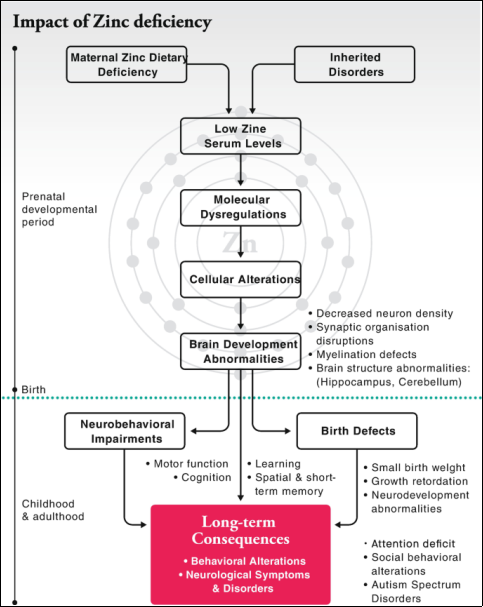
Zinc | Growth, immune function, tissue development | Synaptic formation, neuronal signaling | Emotional regulation |
Iodine | Thyroid hormone synthesis | Brain maturation and neural development | Cognitive performance |
DHA | Cell membrane development | Synapse formation, neural connectivity | Memory and attention |
Micronutrient | Primary Biological Contribution |
|---|---|
Iron | Oxygen transport, energy metabolism, neurotransmitter synthesis |
Zinc | Growth, immunity, neuronal signaling, synaptic function |
Iodine | Thyroid hormone production and brain maturation |
DHA | Neuronal membrane structure, connectivity, cognition |
B-vitamins | Energy metabolism and neurological function |
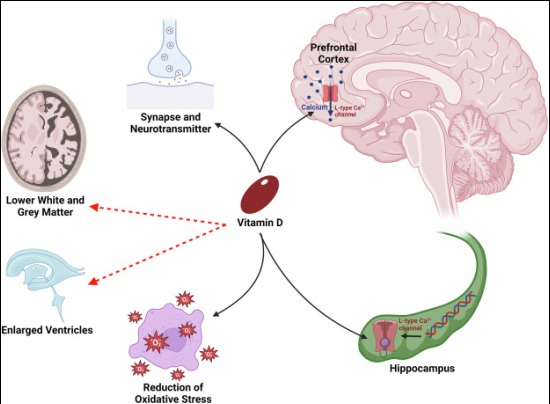
Vitamin D | Bone development, immunity, cellular signaling |
Magnesium | Neural regulation and stress response |
Domain | Clinical Focus | Nutritional Consideration |
|---|---|---|
Body | Growth, immunity, physical development | Protein, iron, zinc, calcium, vitamin D |
Brain | Learning, memory, neurodevelopment | DHA, iron, iodine, zinc, B-vitamins |
Behavior | Attention, mood, social interaction | Iron, DHA, zinc, magnesium |
| [1] | Georgieff MK. Nutrition and the developing brain: nutrient priorities and measurement. Nutrition Reviews. 2016; 74(4): 267–277. |
| [2] | Black MM. Micronutrient deficiencies and cognitive functioning. Journal of Nutrition. 2003; 133(11 Suppl 2): 3927S–3931S. |
| [3] | Prado EL, Dewey KG. Nutrition and brain development in early life. Nutrition Reviews. 2014; 72(4): 267–284. |
| [4] | Cusick SE, Georgieff MK. The role of nutrition in brain development: the golden opportunity of the “first 1000 days.” Journal of Pediatrics. 2016; 175: 16–21. |
| [5] | Victora CG, Adair L, Fall C, et al. Maternal and child undernutrition: consequences for adult health and human capital. The Lancet. 2008; 371(9609): 340–357. |
| [6] | Yakoob MY, Lo CW. Nutrition (micronutrients) in child growth and development: current evidence, recommendations and opportunities for further research. Current Problems in Pediatric and Adolescent Health Care. 2017; 47(8): 221–232. |
| [7] | Petry N, Olofin I, Boy E, Angel MD, Rohner F. The effect of low dose iron and zinc intake on child micronutrient status and development during the first 1000 days of life: a systematic review and meta-analysis. Nutrients. 2016; 8(12): 773. |
| [8] | Lozoff B, Beard J, Connor J, Felt B, Georgieff M, Schallert T. Long-lasting neural and behavioral effects of iron deficiency in infancy. Nutrition Reviews. 2006; 64(Suppl 1): S34–S43. |
| [9] | Beard JL. Why iron deficiency is important in infant development. Journal of Nutrition. 2008; 138(12): 2534–2536. |
| [10] | McCann JC, Ames BN. An overview of evidence for a causal relation between iron deficiency during development and deficits in cognitive or behavioral function. American Journal of Clinical Nutrition. 2007; 85(4): 931–945. |
| [11] | Prasad AS. Zinc in human health: effect of zinc on immune cells. Molecular Medicine. 2008; 14: 353–357. |
| [12] | Black MM. Zinc deficiency and child development. American Journal of Clinical Nutrition. 1998; 68(2 Suppl): 464S–469S. |
| [13] | Hambidge KM. Zinc and trace mineral nutrition during infancy and early childhood. Nutrition Research Reviews. 2000; 13(2): 231–246. |
| [14] | Zimmermann MB. Iodine deficiency. Endocrine Reviews. 2009; 30(4): 376–408. |
| [15] | Delange F. Iodine deficiency as a cause of brain damage. Postgraduate Medical Journal. 2001; 77: 217–220. |
| [16] | Bath SC, Rayman MP. Iodine deficiency in the modern world. Proceedings of the Nutrition Society. 2015; 74(2): 123–131. |
| [17] | Innis SM. Dietary omega-3 fatty acids and the developing brain. Brain Research. 2008; 1237: 35–43. |
| [18] | Carlson SE. Early determinants of development: omega-3 fatty acids and brain development. Journal of Pediatrics. 2009; 155(6 Suppl): S33–S37. |
| [19] | Lauritzen L, Brambilla P, Mazzocchi A, Harsløf LB, Ciappolino V, Agostoni C. DHA effects in brain development and function. Nutrients. 2016; 8(1): 6. |
| [20] | Koletzko B, Lien E, Agostoni C, et al. The roles of long-chain polyunsaturated fatty acids in pregnancy, lactation and infancy. Early Human Development. 2008; 85(3): 155–162. |
| [21] | Saxton RA, Sabatini DM. mTOR signaling in growth, metabolism, and disease. Cell. 2017; 168(6): 960–976. |
| [22] | Manning BD, Toker A. AKT/PKB signaling: navigating the network. Cell. 2017; 169(3): 381–405. |
| [23] | Inoki K, Zhu T, Guan KL. TSC2 mediates cellular energy response to control cell growth. Cell. 2003; 115(5): 577–590. |
| [24] | Nyaradi A, Foster JK, Hickling S, et al. Prospective associations between early childhood diet and cognitive performance. European Journal of Nutrition. 2013; 52: 133–144. |
| [25] | Prado EL, Larson LM, Cox K, Bettencourt K, Kubes JN, Shankar AH. Do effects of early life interventions on child development persist? The Lancet Child & Adolescent Health. 2019; 3(4): 239–250. |
| [26] | Stevens GA, Beal T, Mbuya MNN, et al. Micronutrient deficiencies among preschool-aged children and women of reproductive age worldwide. The Lancet Global Health. 2022; 10(11): e1590–e1599. |
| [27] | UNICEF. Improving Child Nutrition: The Achievable Imperative for Global Progress. UNICEF; 2023. |
| [28] | World Health Organization. Guideline for complementary feeding of infants and young children 6–23 months of age. WHO; 2023. |
APA Style
Hasan, M. M., Ahsan, M., Rahman, M., Ali, M. S., Pandit, P., et al. (2026). The Significant Role of Micronutrients in Early Childhood Development: Linking Iron, Zinc, Iodine and DHA to Body–Brain–Behavior Outcomes. International Journal of Nutrition and Food Sciences, 15(5), 241-247. https://doi.org/10.11648/j.ijnfs.20261505.17
ACS Style
Hasan, M. M.; Ahsan, M.; Rahman, M.; Ali, M. S.; Pandit, P., et al. The Significant Role of Micronutrients in Early Childhood Development: Linking Iron, Zinc, Iodine and DHA to Body–Brain–Behavior Outcomes. Int. J. Nutr. Food Sci. 2026, 15(5), 241-247. doi: 10.11648/j.ijnfs.20261505.17
@article{10.11648/j.ijnfs.20261505.17,
  author = {Mohammad Mahmudul Hasan and Monjurul Ahsan and Mushfiqur Rahman and Mohammad Shaheb Ali and Provati Pandit and Biswajit Chowdhury},
  title = {The Significant Role of Micronutrients in Early Childhood Development: Linking Iron, Zinc, Iodine and DHA to
Body–Brain–Behavior Outcomes},
  journal = {International Journal of Nutrition and Food Sciences},
  volume = {15},
  number = {5},
  pages = {241-247},
  doi = {10.11648/j.ijnfs.20261505.17},
  url = {https://doi.org/10.11648/j.ijnfs.20261505.17},
  eprint = {https://article.sciencepublishinggroup.com/pdf/10.11648.j.ijnfs.20261505.17},
  abstract = {Early childhood is a critical developmental period characterized by rapid physical growth, accelerated brain maturation, and the establishment of cognitive and behavioral functions. Adequate nutrition during this period provides the foundation for optimal development by supplying essential nutrients required for cellular growth, neurological organization, immune function, and metabolic regulation. While macronutrients provide energy and structural components, micronutrients serve as biological regulators that influence multiple developmental pathways. Deficiencies of key micronutrients during early life may compromise physical growth, impair neurodevelopment, and negatively influence learning ability, emotional regulation, and behavioral outcomes. The Body–Brain–Behavior (3B) Axis provides an integrated framework for understanding how nutrition influences whole-child development. This approach recognizes that physical growth, brain maturation, and behavioral regulation are interconnected processes driven by common nutritional and biological pathways. Among essential micronutrients, iron, zinc, iodine, and docosahexaenoic acid (DHA) have emerged as critical contributors to early childhood development. Iron supports oxygen transport, mitochondrial energy production, DNA synthesis, myelination, and neurotransmitter metabolism, particularly dopamine pathways involved in attention, motivation, and learning. Zinc plays essential roles in cellular growth, immune regulation, neuronal communication, synaptic formation, and neuroplasticity. Iodine is required for thyroid hormone production, which regulates neuronal migration, brain growth, myelination, and synaptic development. DHA, a long-chain omega-3 fatty acid and major structural component of neuronal membranes, contributes to synapse formation, neural connectivity, visual development, memory, and cognitive function. Importantly, micronutrients do not act independently; rather, they function synergistically through interconnected biological pathways. Adequate availability of multiple micronutrients supports healthy growth, optimal brain architecture, and adaptive behavioral development, whereas deficiencies may create cascading effects across the Body–Brain–Behavior domains. This review discusses the biological mechanisms through which iron, zinc, iodine, and DHA influence early childhood development and highlights their importance in supporting physical growth, neurodevelopment, cognitive performance, and behavioral regulation. Understanding these relationships reinforces the importance of micronutrient-focused nutritional strategies during the first years of life to maximize developmental potential and support lifelong health outcomes.},
 year = {2026}
}
TY  - JOUR
T1  - The Significant Role of Micronutrients in Early Childhood Development: Linking Iron, Zinc, Iodine and DHA to
Body–Brain–Behavior Outcomes
AU  - Mohammad Mahmudul Hasan
AU  - Monjurul Ahsan
AU  - Mushfiqur Rahman
AU  - Mohammad Shaheb Ali
AU  - Provati Pandit
AU  - Biswajit Chowdhury
Y1  - 2026/09/22
PY  - 2026
N1  - https://doi.org/10.11648/j.ijnfs.20261505.17
DO  - 10.11648/j.ijnfs.20261505.17
T2  - International Journal of Nutrition and Food Sciences
JF  - International Journal of Nutrition and Food Sciences
JO  - International Journal of Nutrition and Food Sciences
SP  - 241
EP  - 247
PB  - Science Publishing Group
SN  - 2327-2716
UR  - https://doi.org/10.11648/j.ijnfs.20261505.17
AB  - Early childhood is a critical developmental period characterized by rapid physical growth, accelerated brain maturation, and the establishment of cognitive and behavioral functions. Adequate nutrition during this period provides the foundation for optimal development by supplying essential nutrients required for cellular growth, neurological organization, immune function, and metabolic regulation. While macronutrients provide energy and structural components, micronutrients serve as biological regulators that influence multiple developmental pathways. Deficiencies of key micronutrients during early life may compromise physical growth, impair neurodevelopment, and negatively influence learning ability, emotional regulation, and behavioral outcomes. The Body–Brain–Behavior (3B) Axis provides an integrated framework for understanding how nutrition influences whole-child development. This approach recognizes that physical growth, brain maturation, and behavioral regulation are interconnected processes driven by common nutritional and biological pathways. Among essential micronutrients, iron, zinc, iodine, and docosahexaenoic acid (DHA) have emerged as critical contributors to early childhood development. Iron supports oxygen transport, mitochondrial energy production, DNA synthesis, myelination, and neurotransmitter metabolism, particularly dopamine pathways involved in attention, motivation, and learning. Zinc plays essential roles in cellular growth, immune regulation, neuronal communication, synaptic formation, and neuroplasticity. Iodine is required for thyroid hormone production, which regulates neuronal migration, brain growth, myelination, and synaptic development. DHA, a long-chain omega-3 fatty acid and major structural component of neuronal membranes, contributes to synapse formation, neural connectivity, visual development, memory, and cognitive function. Importantly, micronutrients do not act independently; rather, they function synergistically through interconnected biological pathways. Adequate availability of multiple micronutrients supports healthy growth, optimal brain architecture, and adaptive behavioral development, whereas deficiencies may create cascading effects across the Body–Brain–Behavior domains. This review discusses the biological mechanisms through which iron, zinc, iodine, and DHA influence early childhood development and highlights their importance in supporting physical growth, neurodevelopment, cognitive performance, and behavioral regulation. Understanding these relationships reinforces the importance of micronutrient-focused nutritional strategies during the first years of life to maximize developmental potential and support lifelong health outcomes.
VL  - 15
IS  - 5
ER  -
Department of Paediatrics, Mymensingh Medical College Hospital, Mymensingh, Bangladesh
Department of Paediatrics, Mymensingh Medical College Hospital, Mymensingh, Bangladesh
Department of Paediatrics, Mymensingh Medical College Hospital, Mymensingh, Bangladesh
Department of Paediatrics, Mymensingh Medical College Hospital, Mymensingh, Bangladesh
Department of Paediatrics, Mymensingh Medical College Hospital, Mymensingh, Bangladesh
Department of Paediatrics, Mymensingh Medical College Hospital, Mymensingh, Bangladesh

Information


 Share This Article
 Twitter
 Linked In
 Facebook
 Copy
Copy Download